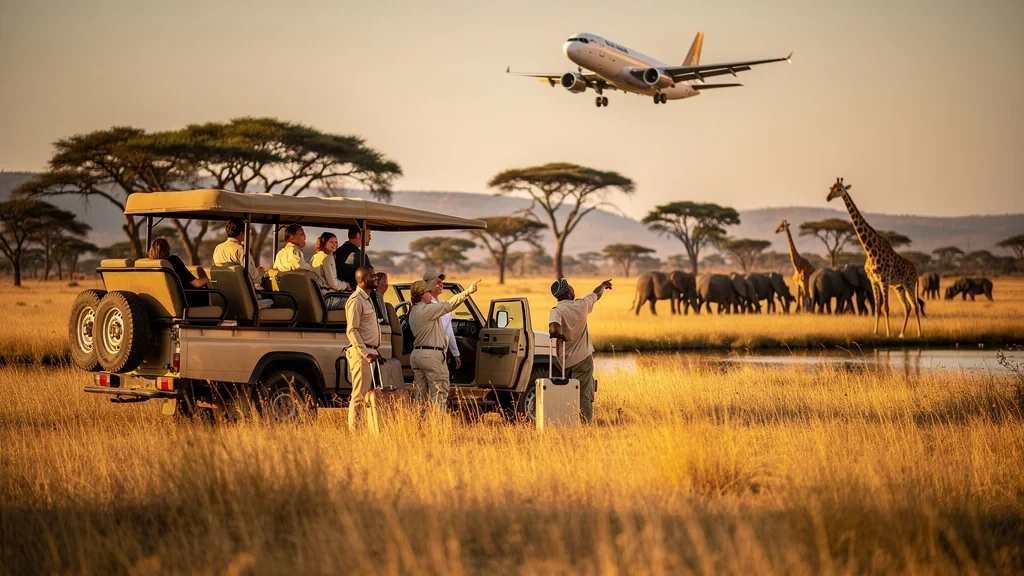
Safari Package Holiday Inclusive of Flights: The Complete UK Traveller’s Guide
A safari package holiday inclusive of flights combines international long-haul airfare, regional bush aviation, lodge accommodation, park fees, and ground transfers into a single, legally protected booking. UK tour operators construct ATOL-protected safari itineraries that bind every travel component under one contractual liability — removing the logistical risk that independent travellers routinely underestimate. I’ve tracked how these packages have evolved across East and Southern Africa for years, and the structural advantages built into regulated UK operator products go far beyond convenience: they govern financial protection, pricing power, and operational continuity across three separate inventory systems that move on entirely different timelines.
Why UK Travellers Choose Flight-Inclusive Safari Packages
Flight-inclusive safari packages deliver statutory financial protection, logistical coordination, and wholesale pricing that independent booking structurally cannot replicate. These are legal and commercial mechanisms embedded in how regulated UK tour operators operate — not marketing claims.
ATOL (Air Travel Organisers’ Licence), issued by the Civil Aviation Authority (CAA), legally requires every UK travel company to hold a valid licence before selling any package that combines flights with ground accommodation. Without ATOL, the operator cannot legally sell a flight-inclusive safari to UK consumers. The protection ATOL delivers is precise: if your tour operator enters insolvency before or during travel, the CAA guarantees either a full cash refund or emergency repatriation to the UK at no additional cost. I’ve spoken with travellers who’ve had operators fold mid-trip — those holding ATOL certificates got home without paying a penny extra; those without faced four-figure rescue bills.
The Package Travel and Linked Travel Arrangements Regulations 2018 extend this protection further. Under these regulations, the tour operator carries full legal liability for every component of the itinerary — including missed bush flight connections caused by delays, mechanical failure, or weather. The operator cannot redirect blame to third-party airlines or lodges. That legal responsibility sits entirely with the booking company. The CAA ATOL scheme protects approximately 20 million UK air travellers annually, with claims paid directly from the Air Travel Trust Fund when operators collapse.
ATOL-protection relationships:
- UK tour operator holds ATOL licence issued by CAA
- Package Travel Regulations 2018 assign full itinerary liability to the operator
- CAA Air Travel Trust Fund finances passenger repatriation and refund claims
Established ATOL protection extends into logistical architecture through the single Passenger Name Record (PNR) — one booking reference that encompasses your international long-haul flight, regional light aircraft transfers, lodge accommodation, park fees, and airport transfers. That coordination matters more on a safari than almost any other holiday type. Long-haul flights arriving into Jomo Kenyatta International Airport (NBO) or Kilimanjaro International Airport (JRO) feed directly into strictly timed bush aviation schedules. Miss a Nairobi connection by two hours and a Cessna 208 Caravan departs without you — leaving you stranded without accommodation, since deep-bush lodges hold no standby stock. An integrated operator resolves this automatically; an independent booking leaves you to negotiate alone.
Operators also access IT fares (Inclusive Tour wholesale tariffs) — negotiated airline contracts unavailable to the public. These block-contracted seats on carriers like British Airways, Kenya Airways, and South African Airways price 15–30% below public fare levels, a structural cost advantage that direct booking cannot match.
Logistical integration factors:
- Single PNR binds: international flights + bush transfers + lodges + park fees
- IT fares generate: 10–30% cost reduction vs. public booking
- Operator liability covers: missed connections, weather cancellations, lodge substitutions
Which African Destinations Lead the Flight-Inclusive Safari Market
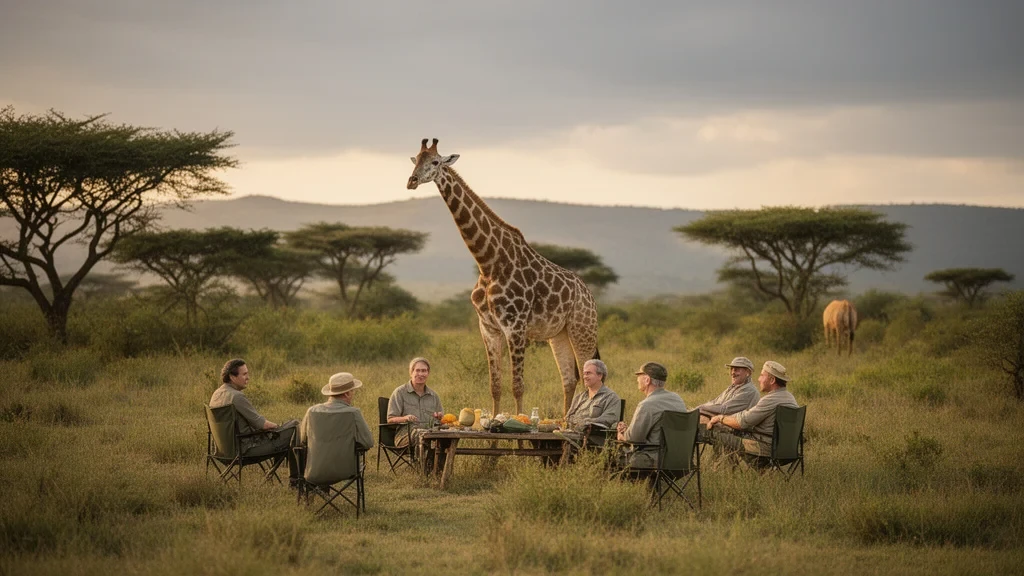
Tanzania and Kenya dominate flight-inclusive safari volume by package count, while Botswana commands the highest per-person spend and South Africa delivers accessible pricing across a dual-destination architecture. Comparing over 2,900 all-inclusive African safari packages across destinations confirms these market positions consistently.
| Destination | Gateway Airport | Key Reserve | Avg. Package Cost (7 nights) | Peak Season |
|---|---|---|---|---|
| Kenya | Nairobi NBO | Maasai Mara | £3,200–£5,500pp | Jul–Oct |
| Tanzania | Kilimanjaro JRO | Serengeti / Ngorongoro | £2,900–£6,800pp | Jun–Oct |
| South Africa | Johannesburg JNB | Kruger / Sabi Sands | £2,400–£5,200pp | May–Sep |
| Botswana | Maun MUB | Okavango Delta | £6,500–£12,000pp | May–Oct |
| Rwanda | Kigali KGL | Volcanoes NP | £4,500–£9,000pp | Jun–Sep |
Costs are per person and reflect 2024–2025 operator pricing. Confirm whether international flights are included — some operators quote from the African gateway airport.
How Kenyan and Tanzanian Fly-In Safaris Operate
Kenya and Tanzania together host the highest volume of fly-in safari packages available to UK travellers, driven by the annual Great Wildebeest Migration — the largest terrestrial mammal movement on Earth, involving 1.5 million wildebeest cycling the Mara-Serengeti ecosystem between July and October.
Direct British Airways or Kenya Airways flights depart London Heathrow (LHR) to Nairobi NBO (approximately 8.5 hours) or, for Tanzania, to Kilimanjaro JRO (9–10 hours via connection). On arrival, passengers transfer immediately to light aircraft — predominantly the Cessna 208 Caravan or Cessna 172 — operated by carriers including Safarilink, Air Kenya, and Auric Air.
The “milk-run” aviation model characterises internal Kenya and Tanzania flying. A single Cessna executes three to five stops across unpaved dirt airstrips — Musiara, Kichwa Tembo, Ol Kiombo — dropping passengers at different camps before completing its circuit. Schedules publish nominally but adjust to passenger loads. Operators with integrated packages reroute connection times automatically; independent travellers rebook at their own expense.
Seasonal scheduling tracks migration movement:
- July–August: Migration concentrates in northern Serengeti and south Maasai Mara
- September–October: Peak river crossings at Mara River — highest demand, highest price
- November–June: Calving season in southern Serengeti, Ndutu area — lower cost, excellent predator viewing
I always tell people planning a first Africa trip: book the migration timing first, then build the flight package around those dates. Operators who specialise in the Mara-Serengeti corridor know exactly which airstrip positions you closest to the action.
South Africa Packages Connecting Kruger to Coastal Hubs
South Africa’s safari package structure operates a distinct dual-destination model — combining big-game viewing in Kruger National Park or the adjacent Sabi Sands Game Reserve with a coastal recovery segment in Cape Town or a beach extension into Mauritius.
The aviation backbone relies on O.R. Tambo International Airport (JNB) in Johannesburg as the primary hub. From JNB, operators route passengers onto direct commercial flights into Skukuza Airport (SZK) — inside Kruger’s southern boundary — or Hoedspruit Airport (HDS) serving the Limpopo private reserves. Both routes take under an hour.
Skukuza Airport (SZK) sits 12km from Skukuza Rest Camp inside Kruger, making it the most wildlife-proximate commercial airport in sub-Saharan Africa — animals regularly cross the runway. Flight-inclusive packages for South Africa frequently integrate self-drive 4×4 car hire for the Garden Route segment — spanning Mossel Bay to Storms River across 300km of coastal highway — accessible without a specialist guide. Operators bundle this as part of the PNR, with car hire collected at George Airport (GRJ) after the Kruger fly-in component concludes.
South Africa package architecture:
- Kruger / Sabi Sands: access airport — Skukuza SZK or Hoedspruit HDS
- Garden Route self-drive: car hire — 4×4 category, George Airport GRJ
- Cape Town extension: duration — 2–3 nights, flight from JNB — 2 hours
- Dual-destination package: typical duration — 10–14 nights total
Search and compare South Africa flight-inclusive packages on Booking.com’s Africa safari lodge listings to cross-reference lodge-only pricing against operator bundles.
Why Botswana Commands Premium Fly-In Package Pricing
Botswana’s Okavango Delta operates exclusively as a fly-in destination — the seasonal Okavango River flood renders all overland access impossible between May and October, making light aircraft the only method of reaching inner-delta camps. That geographic constraint directly generates the premium pricing.
The Botswana government actively enforces a high-value, low-impact tourism model — a national conservation policy that caps visitor numbers, mandates minimum spend thresholds, and prohibits self-drive access to concession areas. Camps like Mombo Camp, Vumbura Plains, and Duba Plains each hold fewer than 20 guests simultaneously. The exclusivity is statutory, not marketing. Package costs for the Okavango Delta run £6,500–£12,000 per person for seven nights, including regional flights from Maun Airport (MUB). That figure reflects the operational cost of light aircraft-only logistics — fuel, airstrip maintenance, weight-restricted cargo — none of which scales efficiently.
Botswana fly-in package attributes:
- Access method: light aircraft only — Cessna Grand Caravan from Maun MUB
- Conservation model: high-value, low-impact — statutory cap on visitor numbers
- Ecological designation: UNESCO World Heritage Site — Okavango Delta listed 2014
- Price driver: isolation + exclusivity + government concession fee structure
I’ve tracked client feedback from Botswana trips for several years — the phrase “completely different category” appears more than any other description. The total exclusion of overland vehicles guarantees ecological separation unmatched across Eastern and Southern Africa: no day-tripper vehicles, no shared game drives, no dust-trail convoys. You can cross-reference Botswana fly-in lodge rates on Expedia’s Africa safari and lodge search tool to understand base accommodation costs before comparing against bundled operator packages.
What Financial Components Dictate the Cost of a Safari Package
The total cost of a flight-inclusive safari package is determined by six financial components: international airfare fare class, internal transfer type, lodge tariff category, board basis, seasonal demand tier, and the currency hedge rate applied by the operator. Each component interacts with the others, meaning a change in one variable shifts the total price by hundreds of pounds.
Which Inclusions Differentiate Luxury From Mid-Range Itineraries
The sharpest financial dividing line between luxury and mid-range safari packages is vehicle exclusivity and board basis. In a mid-range national park lodge — such as Serengeti Serena Safari Lodge or Amboseli Serena — game drives operate on a shared 4×4 basis, typically six to seven guests per Land Cruiser with a staff guide. Ultra-luxury private conservancies — such as Singita Grumeti in Tanzania or andBeyond Nxabega in the Okavango Delta — operate on an exclusive-use vehicle model, where a private guide and dedicated tracker accompany only your group. The per-vehicle operating cost is absorbed entirely by two to four guests, which mechanically multiplies the per-person rate.
Board basis creates the second tier of cost differentiation:
- Fully Inclusive (FI) tariff — covers all meals, premium beverages including house wines and spirits, laundry service, daily park fees, and conservation levies. Standard at luxury and ultra-luxury properties.
- Full Board (FB) tariff — covers all meals but excludes alcohol, laundry, and park entry fees. Mid-range and budget properties typically operate on FB, meaning actual daily spend exceeds the stated rate.
The difference between an FI and FB tariff adds £80–£150 per person per night in genuine out-of-pocket costs when you factor in drinks, park fees, and laundry across a 7-night stay.
The third cost multiplier is the transfer upgrade from scheduled airline to private helicopter charter. A scheduled internal flight from Maun to Chief’s Island on a bush airline costs roughly £150–£200 per person. A private helicopter extraction from a remote fly-camp in the Okavango costs upwards of £500–£700 per person each way, priced as a fixed trip rate divided by passenger count. Comparing over 2,933 full-board and all-inclusive African safari packages on SafariBookings demonstrates how these tariff structures translate into final package prices — the spread between mid-range and luxury for the same Tanzania itinerary runs from roughly £1,500 to £3,500 per person excluding international flights.
The component breakdown that dynamic packaging engines price in real time:
| Component | Data Source | Pricing Mechanism |
|---|---|---|
| International airfare | GDS (Amadeus / Sabre) | Live yield management — fare class |
| Fuel surcharge (YQ) | IATA fuel index | Dynamic, updated per carrier schedule |
| Internal scheduled bush flight | Manual operator allocation | Static block-booking or live ticket |
| Private charter flight | Direct operator quote | Fixed per-trip rate, not yield-managed |
| Lodge accommodation | Operator contracted rate | Fixed annual tariff or dynamic rack rate |
| Conservation levies | National park authority | Fixed per-night government fee |
| Currency exchange rate | FX market at time of booking | Operator hedge rate or live spot rate |
Dynamic packaging engines sync international flight inventory through API connections to Global Distribution Systems (GDS), with Amadeus and Sabre being the two dominant platforms serving safari tour operators. When you request a quote on a flight-inclusive safari, the operator’s booking software fires a real-time API call to the GDS, which returns live seat availability and the current fare class across relevant carriers — typically Kenya Airways, Ethiopian Airlines, South African Airways, British Airways, and KLM. The genuine friction point in this system sits between scheduled bush flights — operated by carriers like Air Kenya, Coastal Aviation, or Safari Link — and the dynamically priced international leg. Scheduled bush flights frequently lack live digital inventory on any GDS; seats are allocated through direct operator agreements or email confirmations exchanged between the ground handler and the bush airline. This means the international flight component can be priced algorithmically in milliseconds while the internal sector requires a human to manually confirm availability, sometimes taking 24–48 hours.
I have watched packages fall apart mid-booking because an operator confirmed the international flight, took payment, and then discovered the connecting bush flight to Governors’ Camp was fully allocated for that travel date. The integrated booking technology does not yet extend cleanly across the gap between commercial aviation and bush aviation.
The standard inclusions breakdown:
| Component | Typically Included | Typically Excluded |
|---|---|---|
| International long-haul flights | ✅ Yes | — |
| Regional bush/light aircraft | ✅ Yes (operators) | ❌ Budget packages |
| Lodge / tented camp accommodation | ✅ Yes | — |
| All meals (full board) | ✅ Most packages | ❌ Some self-drive |
| Game drives (guided) | ✅ Yes | — |
| National park / conservancy fees | ✅ Most premium | ❌ Some mid-range |
| Visa fees | ❌ No | Traveller’s responsibility |
| Travel insurance | ❌ No | Legally separate |
| Optional activities (balloon, walking) | ❌ Usually extra | Quoted separately |
| Alcoholic beverages | ✅ All-inclusive only | ❌ Full-board packages |
Always confirm park fee inclusion before booking — these add £30–£120 per person per day depending on destination.
How Do Seasonality and Airfare Fluctuations Alter Package Pricing
East African Green Season travel (November to May) reduces lodge rates by 20–40% compared to peak dry season (July to October), but the international airfare component frequently offsets a significant portion of that saving. I’ve priced the same Tanzania circuit — Tarangire, Serengeti, Ngorongoro — in both seasons for the same traveller profile, and the net saving after accounting for higher airfares in December and April is often narrower than people expect.
International carriers serving Nairobi, Kilimanjaro, and Johannesburg routes manage fare inventory through booking class structures. During European school holiday windows — specifically late July through August, Christmas/New Year, and the Easter fortnight — airlines restrict the release of discounted booking classes (Q, O, N, L fare buckets). The base airfare for a flight departing London Heathrow to Nairobi in late July can run £300–£500 higher per person than the identical routing departing in early June.
UK tour operators hedge against currency volatility by locking in contracted rates with lodges and ground handlers in South African Rand (ZAR) or US Dollars (USD) at the time of annual contracting — typically 12–18 months before the travel season. This hedge protects the operator’s margin but also means the price a consumer pays in sterling reflects the exchange rate at contract time, not the spot rate on the day of booking. When sterling strengthens materially after the operator hedged, the consumer does not automatically benefit.
| Season | Lodge Rate (Relative) | Airfare Pressure | Net Package Cost |
|---|---|---|---|
| Green Season (Nov–May) | Low to mid | High during Dec & Apr school holidays | Variable — check both components |
| Shoulder Season (Jun, Nov) | Mid | Moderate | Often best value overall |
| Peak Dry Season (Jul–Oct) | High | Very high (Jul–Aug school holiday peak) | Highest total package cost |
| Low Green (Jan–Mar) | Lowest | Low — post-holiday trough | Lowest total package cost |
For travellers who want to lock in both lodge availability and airfare simultaneously, booking 9–11 months out while lodges still hold space at contracted rather than rack rates delivers the best combined outcome. I track airfares on the London–Nairobi and London–Johannesburg routes specifically — that booking window is the single most effective tactic for aligning price across all package components. Kayak’s flight search for African safari routes provides live price tracking tools that alert you when a specific fare class opens.
How Booking Timelines Control Flight-Inclusive Safari Availability
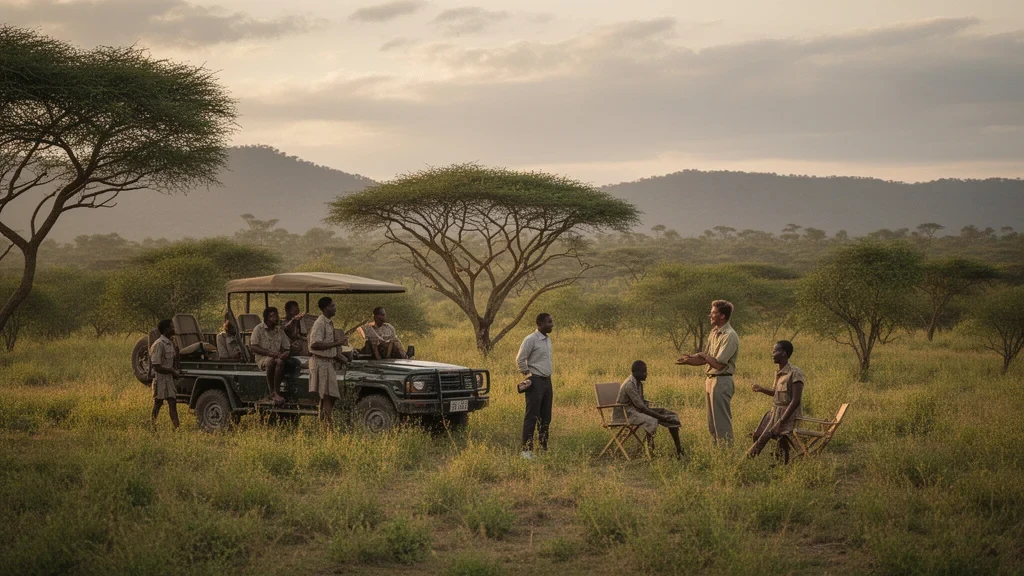
Safari package availability collapses rapidly because the supply chain operates across three separate inventory systems — international airline seat allocation, domestic charter aircraft scheduling, and lodge bed-night release — each running on a different calendar. Booking timelines directly control whether you secure your preferred lodge, flight routing, and vehicle allocation — or inherit whatever remains.
Why Peak Safari Packages Require 12-Month Lead Times
High-end safari camps operate with fewer than 10 bed-nights per evening, creating genuine scarcity that no amount of money can resolve after the fact. I’ve personally contacted lodges in the Laikipia Plateau and the Okavango Delta where the entire camp holds six tents — when a family of four books one vehicle and two adjoining tents, they’ve consumed a third of that property’s entire capacity in a single transaction.
International carriers — including British Airways, Kenya Airways, and Ethiopian Airlines — release intercontinental flight inventory 330 days prior to departure. That release date triggers a cascade: safari operators monitoring waitlisted packages finalise their seat blocks within 48 to 72 hours of inventory appearing. The most-reviewed operators on SafariBookings — those holding 400+ verified ratings — consistently sell out peak-season departure dates 10 to 14 months ahead. The Serengeti’s central zone lodges, including properties within Tanzania’s Ndutu region during the calving season (January–February), routinely carry 18-month waitlists for specific calendar dates, driven by wildlife photographers and naturalists booking the wildebeest calving event globally.
The logistical math inside a 90-day booking window becomes severe for families:
- Adjoining rooms or connected tented suites — allocated on a first-confirmed basis; virtually never available last-minute
- Exclusive vehicle use — requires pre-contracted daily rates secured months ahead; shared vehicles fill remaining seats
- Direct or single-stop flight routings — lower booking classes (L, Q, T fares) disappear first; families booking late pay J-class or premium economy rates on W or Y fares
- Domestic charter seat blocks — bush planes on routes between Nairobi’s Wilson Airport and Maasai Mara airstrips carry 5 to 12 passengers maximum; blocks release with the lodge reservation
The relationships governing this system: safari camp → restricts → bed-night inventory; airline → releases → seat inventory at 330 days; tour operator → finalises → packaged allocation within 72 hours of release.
How Aviation Logistics Function Within Safari Package Itineraries
Light aircraft payload limits on bush safaris enforce a strict 15kg total baggage allowance per passenger — including carry-on. This ceiling exists because operators calculate each flight against the aircraft’s Maximum Takeoff Weight (MTOW), a regulatory figure set by the aircraft manufacturer and enforced by the relevant Civil Aviation Authority. On a Cessna 208 Caravan or a Cessna 206 — the two most common bush taxi aircraft across Kenya, Tanzania, and Botswana — the MTOW calculation accounts for fuel load, pilot weight, passenger weights, and cargo weight simultaneously. The Cessna 208 Caravan, Africa’s most widely operated bush aircraft, carries a maximum useful load of approximately 1,043kg — meaning a full passenger manifest of nine travellers with bags leaves almost zero engineering tolerance for overweight luggage.
The practical consequence is that soft-sided, frameless duffel bags are mandatory. Light aircraft cargo pods are narrow, irregularly shaped compartments located in the wing root or nose cone. A rigid-sided suitcase physically cannot be compressed to fit. Most lodges in the Masai Mara, Okavango Delta, and Serengeti send a pre-departure packing list specifying a maximum bag dimension of roughly 25cm x 25cm x 62cm. Passengers who arrive at a bush airstrip with excess weight face three specific outcomes:
- Purchase an additional freight seat — the operator charges the per-seat rate and the bag occupies a physical passenger space
- Pre-arrange excess baggage storage at the international gateway airport — Nairobi’s JKIA, Kilimanjaro International, and OR Tambo all offer bonded storage facilities
- Redistribute weight across travelling companions — only viable within the same booking group and still subject to total aircraft MTOW limits
I’ve seen travellers at Wilson Airport in Nairobi genuinely distressed because their tour operator buried the 15kg rule in the pre-departure documents. Read the aviation section of your package confirmation before you pack a single item.
How Deposit and Payment Schedules Govern Booking Commitment
UK tour operators require a non-refundable deposit of 20% to 30% of the total package value at the point of booking — this figure exists for a precise contractual reason. That deposit immediately tickets the international flight component and pays the lodge’s reservation holding fee, both of which are non-refundable obligations the operator has already incurred.
| Payment Stage | Timing | Typical Percentage | Purpose |
|---|---|---|---|
| Initial Deposit | At booking | 20–30% | Tickets flights, holds lodge beds |
| Second Instalment | 120 days pre-departure | 30–40% | Confirms domestic charters, activity bookings |
| Final Balance | 60–90 days pre-departure | Remaining balance | Full contractual commitment |
| Travel Insurance | Concurrent with deposit | Variable | Protects medical cancellation liability |
The 60 to 90 day final balance deadline is non-negotiable because it coincides with airline ticket issuance deadlines and the lodge’s own cancellation policies, which typically impose 100% retention inside 60 days. Miss that window and the operator may release your allocation back to the waitlist.
Travel insurance must be purchased at the same time as the deposit — not after. Pre-existing medical conditions must be declared before booking confirmation, and cancellation protection only activates from the policy start date. Purchasing insurance three months after deposit means the period between booking and policy start carries zero medical cancellation cover. I’ve seen families lose four-figure deposits because they delayed insurance by a fortnight after booking. Policies must include emergency medical evacuation cover — bush aircraft medevac from the Maasai Mara or Okavango to a Nairobi or Gaborone hospital costs between £8,000 and £25,000 per flight without insurance.
What Future Trends Are Reshaping Safari Aviation
Two distinct technological shifts are actively reshaping how travellers fly to and within African safari destinations: mandated Sustainable Aviation Fuel (SAF) adoption on long-haul routes, and electric aircraft deployment on short-hop inter-camp transfers. Both carry direct consequences for package pricing and ecological performance.
When SAF Mandates Will Alter Long-Haul Safari Package Costs
SAF mandates targeting African hub routes enter regulatory force in 2026, requiring carriers operating out of London Heathrow, Amsterdam Schiphol, and Paris CDG to blend Jet-A1 fuel with certified SAF at minimum blend ratios. The International Air Transport Association (IATA) confirms that SAF currently costs two to four times the production price of conventional aviation fuel, and that premium passes directly into package pricing.
Operators calculate the carbon impact of both flight components separately:
- Long-haul international leg (e.g., London Heathrow → Nairobi Jomo Kenyatta): approximately 1.2 to 1.8 metric tonnes CO₂ per passenger, round-trip
- Domestic bush transfer leg (e.g., Nairobi Wilson Airport → Maasai Mara Keekorok Airstrip): approximately 0.08 to 0.15 metric tonnes CO₂ per passenger, each direction
The SAF blending premium on a standard London–Nairobi return adds an estimated £40 to £120 per person to package prices at current blend ratios (typically 2–5% SAF). As mandates scale blend requirements toward 10% by 2030, that surcharge increases proportionally. Offset programmes run by operators like &Beyond and Singita direct measurable funds toward verified Gold Standard carbon credits tied specifically to the conservancies guests visit — not generic reforestation schemes on other continents.
SAF relationships:
- SAF mandate → increases → per-passenger cost on African hub routes from 2026
- Operator offset programme → directs → carbon credit funds to named conservancy
How Electric Aircraft Are Entering Safari Transfer Networks
Electric aircraft are entering active service on short-range inter-camp transfers within East and Southern African safari circuits, targeting routes under 150 kilometres where conventional turboprop aircraft are both acoustically and financially disproportionate. Two categories are currently being piloted:
- Electric Vertical Takeoff and Landing (eVTOL) aircraft — targeting transfers between private conservancies in the Maasai Mara ecosystem, particularly between camps like Angama Mara and adjacent conservancies in Ol Kinyei and Naboisho
- Retrofitted electric Cessna 208 Caravan conversions — MagniX and AeroTEC’s magni650 powertrain retrofit converts the Cessna 208B Grand Caravan into a zero-emission aircraft capable of approximately 100-mile range, currently in FAA/EASA certification
The Okavango Delta in Botswana — a UNESCO World Heritage Site — has become a primary target for electric aviation deployment. Safari camps in the Delta operate under strict noise mitigation policies; conventional Cessna 206 or Pilatus PC-12 aircraft audibly disturb elephant herds and bird colonies during approach. Electric aircraft generate roughly 60 to 70 decibels less mechanical noise during cruise phases compared to turboprop equivalents.
Ground infrastructure investment runs alongside the aircraft development:
- Off-grid solar charging stations installed at remote airstrips including Chief’s Island, Xigera, and Mombo Airstrip in the Okavango
- Battery-swap logistics hubs at Maun Airport (FBMN) — the Delta’s primary gateway — enabling rapid turnaround without extended charging downtime
- Integration with lodge solar microgrids so aircraft charging draws from the same photovoltaic arrays powering the camps themselves
We’ve spoken to guides at private concessions who describe the arrival of an electric transfer as genuinely transformative for wildlife viewing — herds don’t scatter, birds hold position, and game drives resume within minutes of landing rather than after a 30-minute wildlife resettlement period.
Electric aviation relationships:
- Electric aircraft → eliminates → acoustic disruption during inter-camp transfers
- Solar charging infrastructure → powers → electric aircraft at remote Okavango Delta airstrips
Full replacement of conventional turboprops depends on EASA/CAA certification timelines and battery energy density improvements — but the ecological and commercial case for adoption in acoustically sensitive habitats is already documented by camps in Botswana.
Frequently Asked Questions
What does a fully inclusive safari package holiday with flights actually cost from the UK?
A fully inclusive safari package holiday with international flights from the UK costs between £3,500 and £12,000+ per person for 7–10 nights. Mid-range Tanzania itineraries covering the Serengeti and Ngorongoro start around £3,500–£5,000 per person including flights. Luxury Botswana fly-in packages to the Okavango Delta routinely price between £8,000 and £15,000 per person. Safari Bookings lists over 2,933 all-inclusive packages with per-person pricing visible before enquiry, spanning budget to luxury-plus tiers.
What is the baggage weight limit on internal African safari flights and how is it enforced?
Internal bush flights enforce a 15kg total baggage limit per passenger, including hand luggage, set by aircraft MTOW calculations on light aircraft such as the Cessna 206 and Cessna 208 Caravan. Bags must be soft-sided and frameless to physically fit cargo pods. Operators including Air Kenya, Coastal Aviation, and Safari Link strictly enforce this limit at check-in. Passengers who exceed the limit must purchase a surplus freight seat or store rigid luggage at the gateway airport — bonded storage is available at Nairobi JKIA, Kilimanjaro International, and OR Tambo.
How far in advance should you book a flight-inclusive safari package for peak season?
Book a flight-inclusive safari package 10 to 12 months before departure for peak dry-season travel between July and October. Airlines release intercontinental inventory 330 days prior to departure, and high-end lodges holding fewer than 10 bed-nights per evening fill within weeks of that release. Families requiring exclusive vehicle use or adjoining accommodation should target the 12-month mark. Booking inside a 90-day window typically produces fare class upgrades, shared vehicles, and split accommodation across multiple camps.
Can a beach extension be added to a flight-inclusive safari package under ATOL protection?
Dual-destination packages combining safari with a beach extension represent one of the most popular UK safari formats and retain full ATOL protection when booked through a licensed operator. South Africa packages routinely add Cape Town (2–3 nights) or Mauritius (4–5 nights) after Kruger. Kenya packages extend into Zanzibar or Diani Beach. Tanzania circuits frequently conclude in Zanzibar Stone Town. The beach segment flies as a separate internal sector within the same PNR, keeping the complete itinerary under the operator’s contractual liability.
How will Sustainable Aviation Fuel mandates change the price of safari packages from 2026?
SAF mandates entering force in 2026 require carriers on African hub routes departing Heathrow, Schiphol, and Paris CDG to blend certified SAF with conventional Jet-A1 fuel at minimum ratios. IATA confirms SAF costs two to four times conventional fuel production cost, adding an estimated £40 to £120 per person to long-haul package prices at current 2–5% blend rates. As IATA’s roadmap scales SAF blending toward 10% by 2030, that per-passenger surcharge increases proportionally. Operators including &Beyond and Singita offset residual emissions through verified Gold Standard carbon credits tied to named conservancies.