African Safari Seasons: Dry Season, Green Season and When to Book
African safari seasons are a travel-planning framework for safari travellers comparing wildlife conditions across East and Southern Africa. They describe recurring dry and rainy periods, but their dates and effects change by country, ecosystem and year.
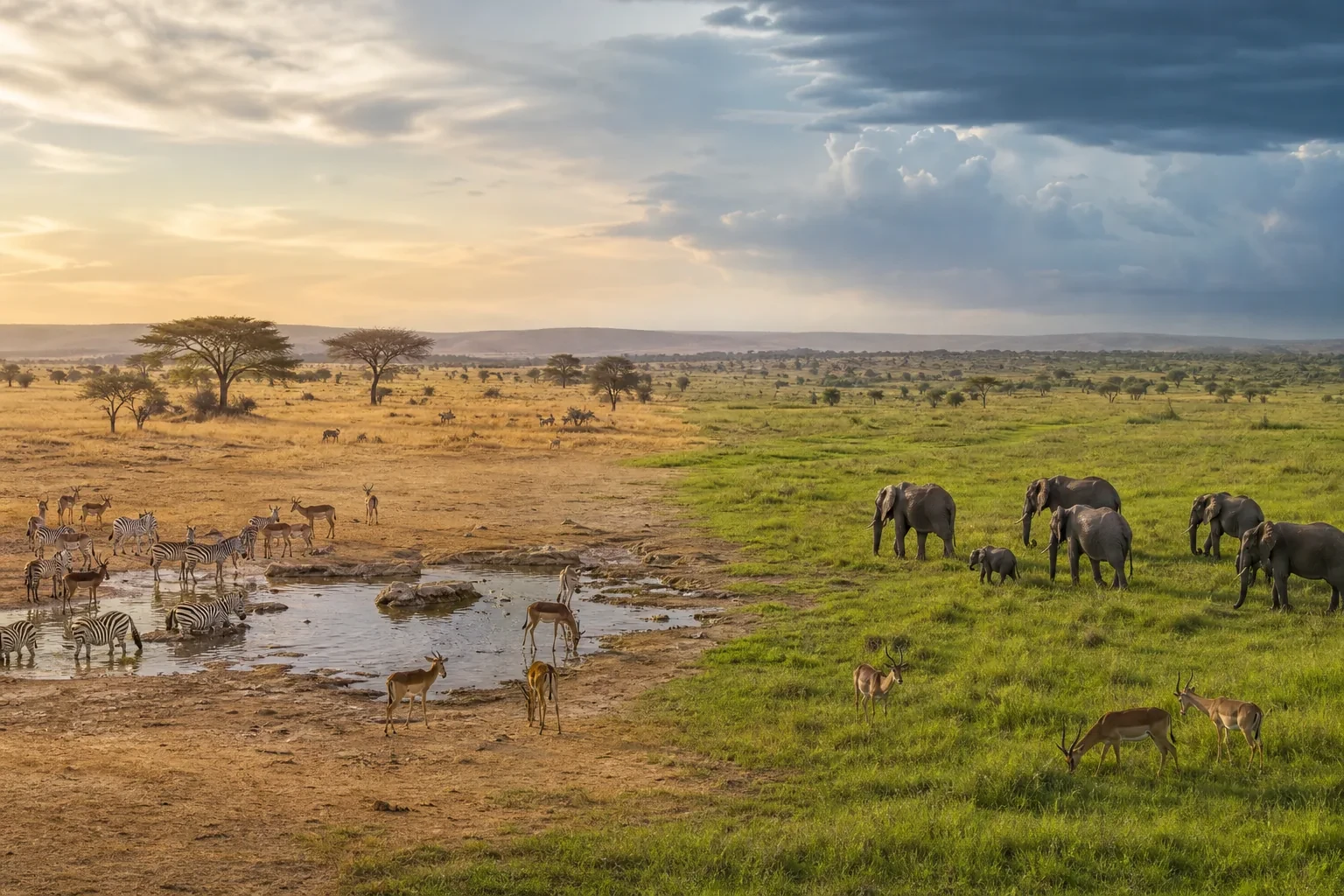
The practical choice is not simply “dry or wet.” Travellers need to compare the reserve, rainfall pattern, road access, wildlife movement, heat, crowd levels and lodge terms. Kenya’s main long-rain period usually falls from March to May, while the Kenya Meteorological Department treats October to December as the short-rain season. In South Africa, SANParks records Kruger’s rainy season from October to March and its dry season from April to September.
Africa-Wide Safari Season Comparison
| Safari region | Broad dry period | Broad rainy or green period | Planning effect | Primary source |
|---|---|---|---|---|
| Kenya | Many areas are drier in January–February and June–September | Long rains: March–May; short rains: October–December | Check the current regional forecast because rainfall differs between the coast, highlands, Rift Valley and arid north | Kenya Meteorological Department |
| Serengeti–Mara ecosystem | Movement often reaches northern Serengeti and the Mara during the middle of the year | Rainfall and fresh grazing influence the circular route | Treat river-crossing months as a planning window, not a guaranteed appointment | UNESCO Serengeti profile |
| Kruger National Park | April–September | October–March | Dry months bring sparse vegetation and wildlife closer to rivers and waterholes; rainy months bring thicker vegetation and summer bird activity | SANParks climate guide |
| Zambia | Many wildlife areas are easiest to access from roughly June–October | Wet-season access varies by park and soil conditions | Some remote camps close when rivers rise or black-cotton roads become difficult | Zambia Tourism |
| Namibia | Cooler, drier months commonly support waterhole-based viewing | Summer rain changes vegetation and birdlife | Match the trip to Etosha, desert landscapes or the Zambezi Region rather than applying one national rule | Namibia Tourism Board guide |
What the Dry Season Changes
Dry conditions reduce surface water and thin some vegetation. SANParks explains that Kruger wildlife gathers closer to rivers and waterholes during the dry months, while shorter grass can open longer sightlines. Guides can therefore search known water points and river systems rather than covering the same distance used during the rains.
- Water distribution changes where animals drink and travel.
- Vegetation density changes how far a guide and traveller can see.
- Road conditions can make remote areas easier to reach.
- Temperature can produce cold dawn drives even when afternoons remain warm.
What the Green Season Changes
Rain restores grazing, fills seasonal water sources and spreads animals across a wider area. It can also bring migratory birds, newborn herbivores, dramatic skies and fewer vehicles in some reserves. The trade-off is operational: tall grass can obscure smaller animals, downpours can interrupt a drive, and some dirt roads or seasonal camps may close.
Green-season value must be checked against the actual booking. Compare the room rate, included meals, game-drive schedule, transfer terms and cancellation window. A lower room price does not help if a seasonal airstrip, road or camp is closed on the travel date.
Match the Season to the Safari Entity
- Kruger National Park links dry-season water sources to vehicle-based wildlife viewing.
- The Serengeti–Mara ecosystem links rainfall and grazing to the Great Migration route.
- Amboseli National Park links permanent wetlands to elephant viewing; read the Amboseli safari guide.
- Kenya’s rainfall calendar links national planning to the best time to visit Kenya.
- Lodge terms link seasonal prices to the final cost; use the Safari Deals and Lodges Hub to compare the full booking.
How Far Ahead Should Travellers Book?
Book around the scarcity of the exact room, camp and travel window rather than a universal countdown. A small conservancy camp during a migration period has less inventory than a large year-round lodge. Before paying, ask the property or booking platform to confirm:
- whether the camp operates on every booked night;
- which game drives, park fees and transfers the rate includes;
- whether rain can change the airstrip or road transfer;
- the cancellation date and amount that becomes non-refundable.
Frequently Asked Questions
Which African country has the best year-round safari season?
No country has one season that is best for every traveller. South Africa offers year-round access to Kruger, Kenya combines resident wildlife with seasonal migration, and Zambia’s remote parks can have stricter wet-season access. Choose the reserve first, then compare its monthly conditions.
Does rain cancel a safari?
Light or intermittent rain does not automatically cancel a game drive. Heavy rain can affect visibility, river crossings, unsealed roads and airstrips. Ask the operator for the reserve-specific wet-weather plan.
Are river crossings guaranteed in peak migration months?
No. UNESCO describes the migration as a circular movement driven by pasture and water. Rainfall, grazing and herd position vary, so no lodge can promise a crossing on a particular date.
Compare Safari Accommodation
After selecting the reserve and travel window, compare availability through Booking.com Africa safari lodges, Expedia Africa accommodation and Kayak Africa hotels. Check the final room terms on the partner site before booking.