Walking Safaris in Africa: Guided Bush, Tracking and Birding Walks
Walking safaris in Africa place a small group on foot with a trained guide who interprets wildlife signs, plants, birds and landscape relationships along an assessed route.
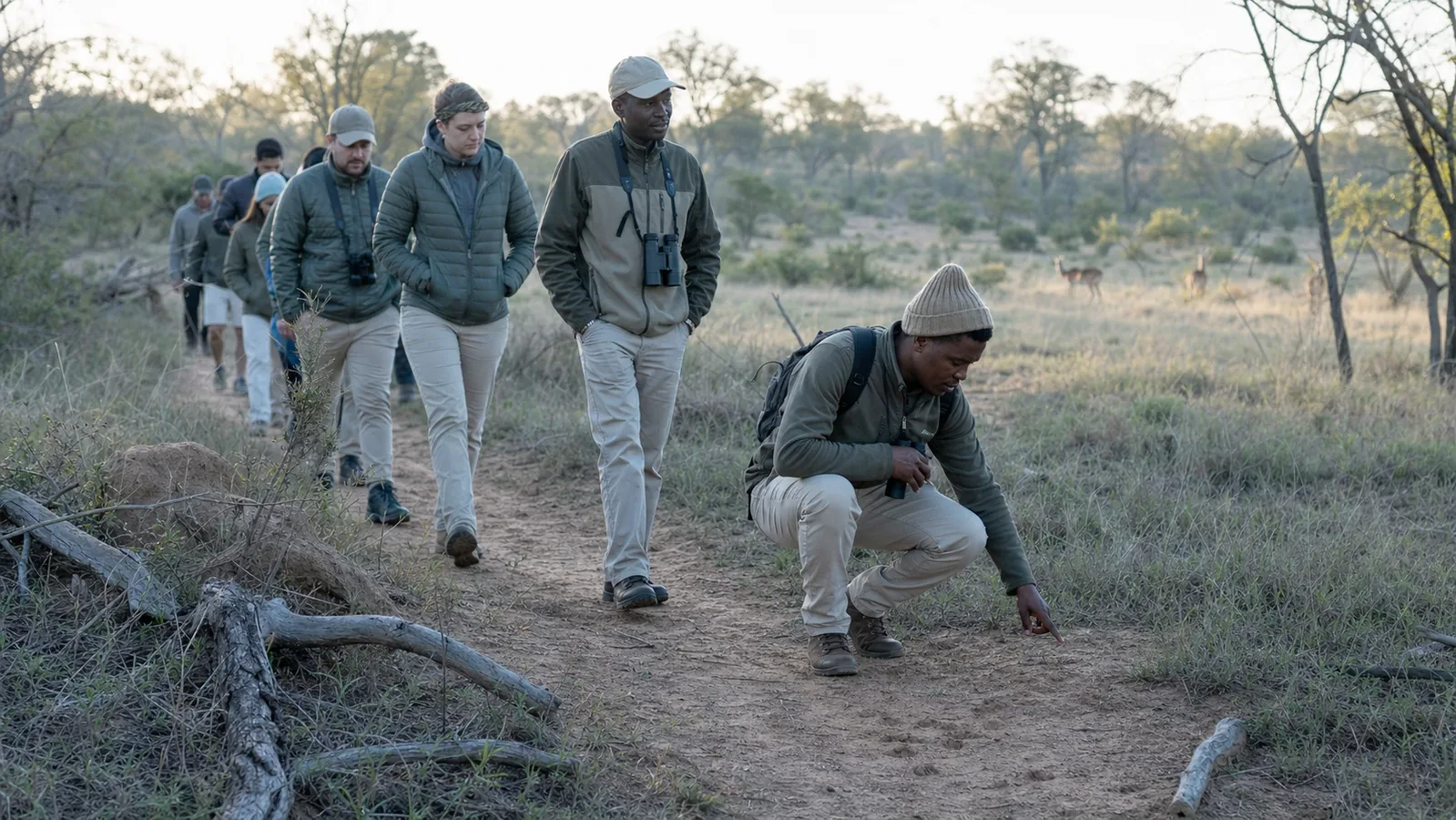
What defines a walking safari
A walking safari combines a guide, a group, a route and conditions judged suitable on the day. The guide sets pace and spacing, explains behaviour and decides when the group should stop, change direction or return. A walk is not simply a vehicle safari without the vehicle. Its subject is the connected evidence of the landscape.
Access depends on local rules, wildlife conditions, weather, guide availability and participant requirements. Travellers should follow the guide’s briefing and should never leave a designated route without authorisation.
Guided bush walks
A guided bush walk introduces the ecology of a reserve at ground level. The guide connects tracks, dung, plants, insects, sounds and larger wildlife to the habitat. Duration and physical demand vary widely, so the booking should state approximate distance, terrain, temperature and rest arrangements.
Tracking safaris
A tracking safari concentrates on signs that indicate where an animal moved and what it did. Footprints, stride, direction, freshness and nearby disturbance provide evidence. The guide interprets that evidence and decides whether following it is suitable. Tracking does not promise a close encounter and should not be marketed as one.
Birding walks
A birding walk uses slower movement, listening and repeated observation to identify species and behaviour. Habitat may matter more than distance. Ask whether the guide supplies binoculars, whether the route visits more than one habitat and whether the walk suits beginners as well as experienced birders.
Nature trail walks
A nature trail walk follows a defined route with an ecological or landscape focus. It may examine plant use, geology, insects, water systems and animal signs rather than search for large mammals. This format can suit travellers who want interpretation without a long wilderness route, but accessibility still depends on the individual trail.
Walking safari safety questions
- Who leads the walk? Ask the operator to state the guide’s role and the rules that govern the activity.
- How large is the group? A smaller group can make communication and pace easier to manage.
- What are the age and fitness requirements? Minimum ages and route demands differ between destinations.
- What should participants carry? Water, closed footwear, sun protection and neutral clothing may be advised, but the operator’s list takes priority.
- Can the route change? Wildlife, heat, rain and wind may alter the plan at short notice.
Walking and vehicle activities work together
A walking safari provides detail; a game drive covers distance. Travellers do not need to choose only one. A morning walk and a later vehicle drive can reveal different relationships within the same reserve, subject to the operator’s programme.
Compare destinations through the African safari destinations hub, then confirm whether a lodge or park provides walking activities during the intended travel period.
Official walking guidance
SANParks publishes guided-walk information for Kruger National Park, including operational requirements that demonstrate how rules can differ from vehicle activities. Travellers should confirm current age limits, clothing advice, departure arrangements and cancellations directly with the responsible park or operator.