Game Drives in Africa: Morning, Evening, Full-Day and Night Safaris
Game drives in Africa use a guided safari vehicle to move through a park, reserve or conservancy in search of wildlife and evidence of animal activity.
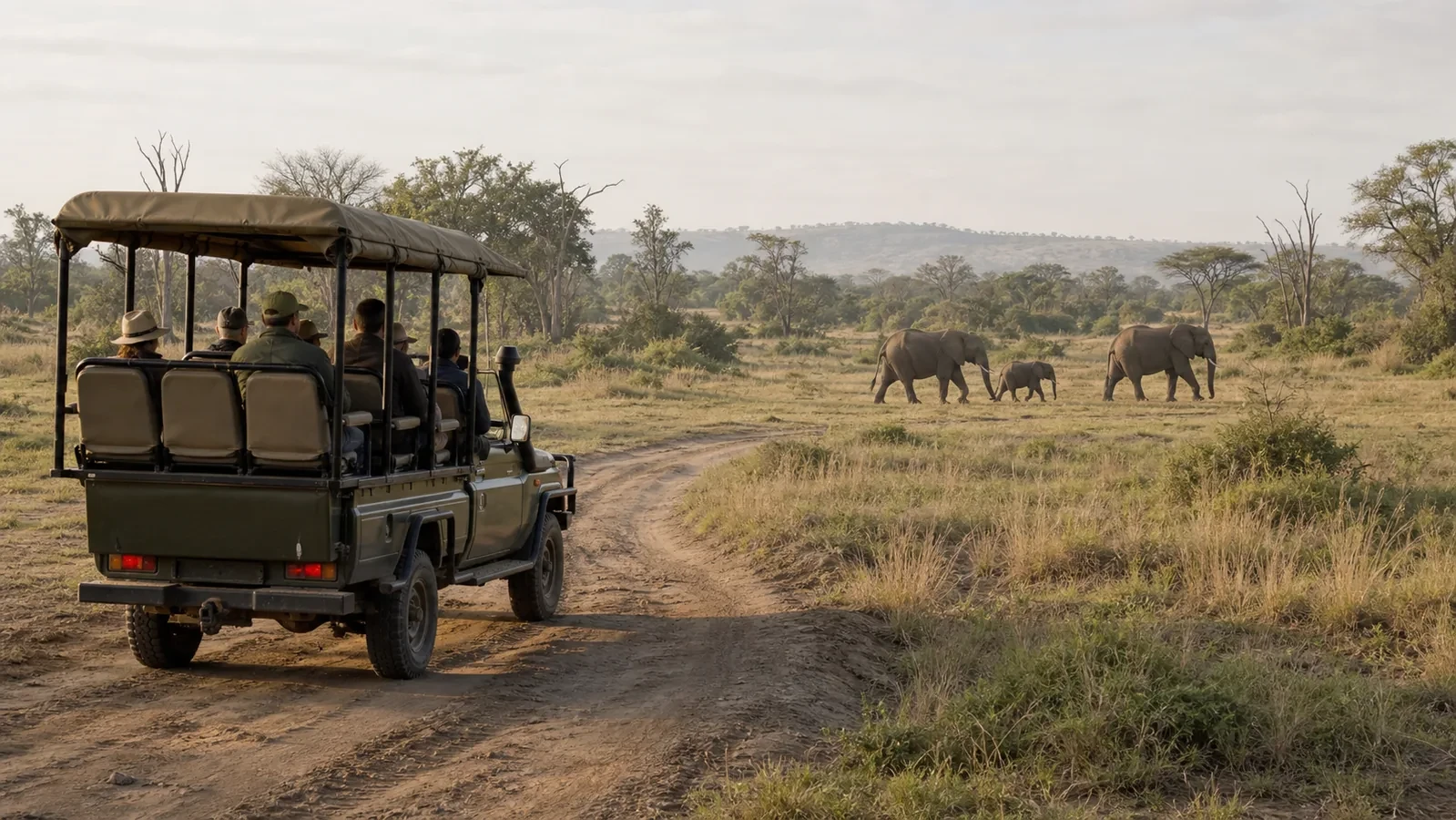
What a game drive includes
A game drive combines a vehicle, a guide, a route and a defined operating period. The guide interprets tracks, calls and animal behaviour while following the access rules of the destination. The vehicle may be open-sided or enclosed. Seating, roof design, passenger capacity and off-road access vary between parks, private reserves and operators.
Wildlife sightings cannot be guaranteed. The practical value of a drive comes from informed searching, safe positioning and interpretation of the habitat.
Morning game drives
A morning game drive starts around the cooler part of the day, although the exact departure time changes by season and operator. Lower temperatures may support animal movement, while softer early light suits photography. Travellers should ask whether breakfast is served before departure, during a stop or after the drive.
Evening and sunset game drives
An evening game drive begins later in the day and may continue into dusk where park rules allow. The changing light can reveal different behaviour from a morning route. Operators may describe this format as an evening, sunset or sundowner drive; the label does not guarantee that drinks, a stop after dark or night access are included.
Full-day game drives
A full-day game drive gives the guide more time to connect distant habitats, water sources and wildlife areas. The longer duration can suit travellers with limited days in a destination, but it also means more time seated in a vehicle. Confirm the route, meal arrangements, toilet stops, shade and whether the day uses one vehicle throughout.
Night safari drives
A night safari drive operates after dark only where local rules permit it. Guides may use controlled spotlights to locate nocturnal species and avoid prolonged disturbance. Access is not universal. Some national parks restrict self-drive visitors after gate closing times while authorised operators provide designated activities.
Photographic safari drives
A photographic drive gives the group more time to position the vehicle, wait for behaviour and manage camera equipment. The useful attributes are not the label alone. Ask about passenger numbers per row, beanbag support, charging options, vehicle height, lens storage and whether other guests share the drive. The safari photography guide explains equipment and field technique.
Private and shared vehicles
| Format | Relationship | Consideration |
|---|---|---|
| Private drive | One booking controls the vehicle schedule with the guide | Usually costs more, but supports a chosen pace and subject focus |
| Shared drive | Several bookings share the vehicle and guide | Usually costs less, but route and stopping time reflect group priorities |
| Lodge activity | The accommodation arranges the drive | Check whether the activity and park fees are included in the room rate |
| Park activity | The park or a concessionaire operates the drive | Confirm meeting point, gate time and transport from the accommodation |
Where to compare game drives
Kenya safari planning connects game-drive formats with the Masai Mara and other Kenyan destinations. The South Africa safari hub connects them with national parks and private reserves. Lodge choice also affects access, so compare the experience with the luxury safari lodge guide.
Official activity guidance
SANParks describes guided game-drive formats in Kruger National Park. SANParks also publishes activity information for Addo Elephant National Park. These examples show why travellers should verify current departure times, age rules, fees and access with the destination responsible for the activity.