Amboseli National Park: Kenya’s Elephant and Kilimanjaro Safari Destination
Amboseli National Park is a national park serving wildlife travellers in Kajiado County, southern Kenya. Kenya Wildlife Service manages the park, which combines open plains, acacia woodland, swamps and marshes beneath views of Mount Kilimanjaro across the border in Tanzania.
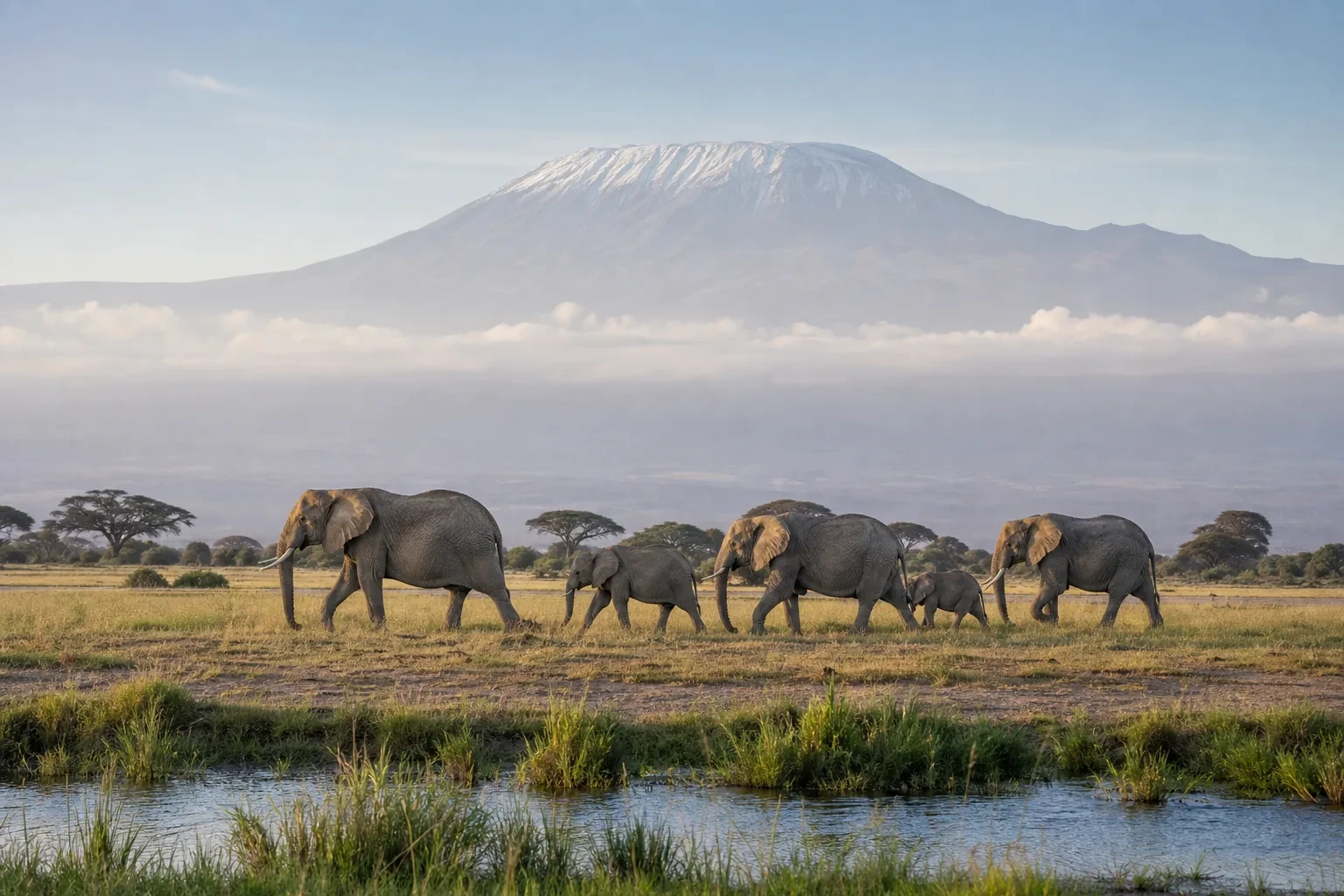
Amboseli is closely associated with African savanna elephants because the ecosystem supports long-term individual monitoring by the Amboseli Trust for Elephants. The research programme has followed known elephants since 1972. For travellers, the practical result is a safari centred on elephants, wetland-edge wildlife, open-country viewing and changing mountain visibility.
What Wildlife and Habitats Does Amboseli Offer?
| Amboseli entity | Verified attribute | Traveller decision | Source |
|---|---|---|---|
| Elephants | Amboseli supports one of the longest continuously studied wild elephant populations | Allow repeated drives rather than treating one photograph as the entire visit | Amboseli Trust for Elephants |
| Swamps and marshes | Wetland habitats support wildlife within a wider dryland ecosystem | Ask which drives reach the wetland edge and at what time | Kenya Wildlife Service |
| Mount Kilimanjaro view | The mountain lies in Tanzania and forms the park’s southern backdrop | Cloud can hide the summit; plan dawn and late-day viewing rather than expecting an all-day clear view | Kenya Wildlife Service |
| Kimana airstrip | KWS lists a 1.2 km tarmacked airstrip for light aircraft | Compare a road transfer with a scheduled or charter flight offered for the booked date | Kenya Wildlife Service |
| Park gates | KWS lists normal opening at 06:00 and closing at 18:00, except for overnight guests | Build arrival and departure times around the gate rule | Kenya Wildlife Service |
Why Amboseli’s Elephant Research Matters
The Amboseli Elephant Research Project records individuals through repeated field observations. A published demographic study by Cynthia Moss used the histories of 1,778 known elephants and described births, survival, mortality and reproductive intervals across the long-running dataset. These records support specific statements about the study population without substituting a marketing estimate for field evidence.
Travellers should still treat elephants as wild animals. A guide chooses a legal route and safe stopping point; the herd chooses its direction. Kenya Wildlife Service asks visitors to respect wildlife privacy and right of way.
Dry Months, Rain and Mountain Visibility
Dry periods can gather wildlife closer to permanent water, while rain spreads water and fresh grazing across a wider area. Neither season guarantees a clear Kilimanjaro view. Local cloud often changes through the day, so a multi-night stay gives more dawn and evening opportunities.
- Permanent wetlands supply water inside a dryland ecosystem.
- Elephant families move between feeding areas, water and wider dispersal land.
- Mount Kilimanjaro provides a photographic backdrop when cloud clears.
- Kenya Wildlife Service sets park access rules and conservation fees.
- Amboseli lodges connect rooms to transfers and game-drive schedules.
Where to Stay in Amboseli
First identify whether the property sits inside the park, near a gate or in the wider ecosystem. Map distance alone can mislead: an outside property may require a gate queue and daily transfer, while an inside property may carry a different rate structure. Ask for the named gate, expected drive time, meal basis, park-fee treatment and whether game drives are private or shared.
How Amboseli Fits a Kenya Itinerary
Amboseli creates a distinct safari subject from the Maasai Mara. Amboseli centres elephants, wetlands and Kilimanjaro views; the Mara centres a larger grassland ecosystem, resident predators and seasonal migration. Combining them can make sense when the transfer plan leaves enough full drive periods in each park.
Use the best time to visit Kenya guide to compare rainfall periods, then check the official KWS page for current fees and access notices.
Frequently Asked Questions
How do travellers reach Amboseli National Park?
KWS lists road access and Kimana airstrip for light aircraft. Ask the operator to name the road route, gate, vehicle type, baggage limit and scheduled flight before comparing travel time.
Can travellers always see Mount Kilimanjaro?
No. Cloud can hide the mountain even in otherwise dry weather. Dawn and late afternoon often provide additional viewing chances, but no lodge should promise a clear summit.
Is Amboseli better than Maasai Mara?
They answer different wildlife and landscape interests. Choose Amboseli for its elephant research context, wetlands and mountain backdrop. Choose the Mara for grassland predators, conservancy choices and migration context.
What are the current park fees?
Fees can change. Read the current amount and visitor category on the official Kenya Wildlife Service page before paying for a package.
Compare Amboseli Accommodation
Compare identical dates through Booking.com Amboseli properties, Expedia Amboseli hotels and Kayak Amboseli accommodation. Confirm the gate, transfer and park-fee terms on the final booking page.