The Great Migration: The World’s Largest Wildlife Movement Through Kenya and Tanzania
The Great Migration is an annual circular wildlife movement used by safari travellers planning visits across northern Tanzania and southwestern Kenya. Wildebeest, zebra and gazelles move through the Serengeti–Mara ecosystem in response to pasture and water, followed by predators and scavengers.
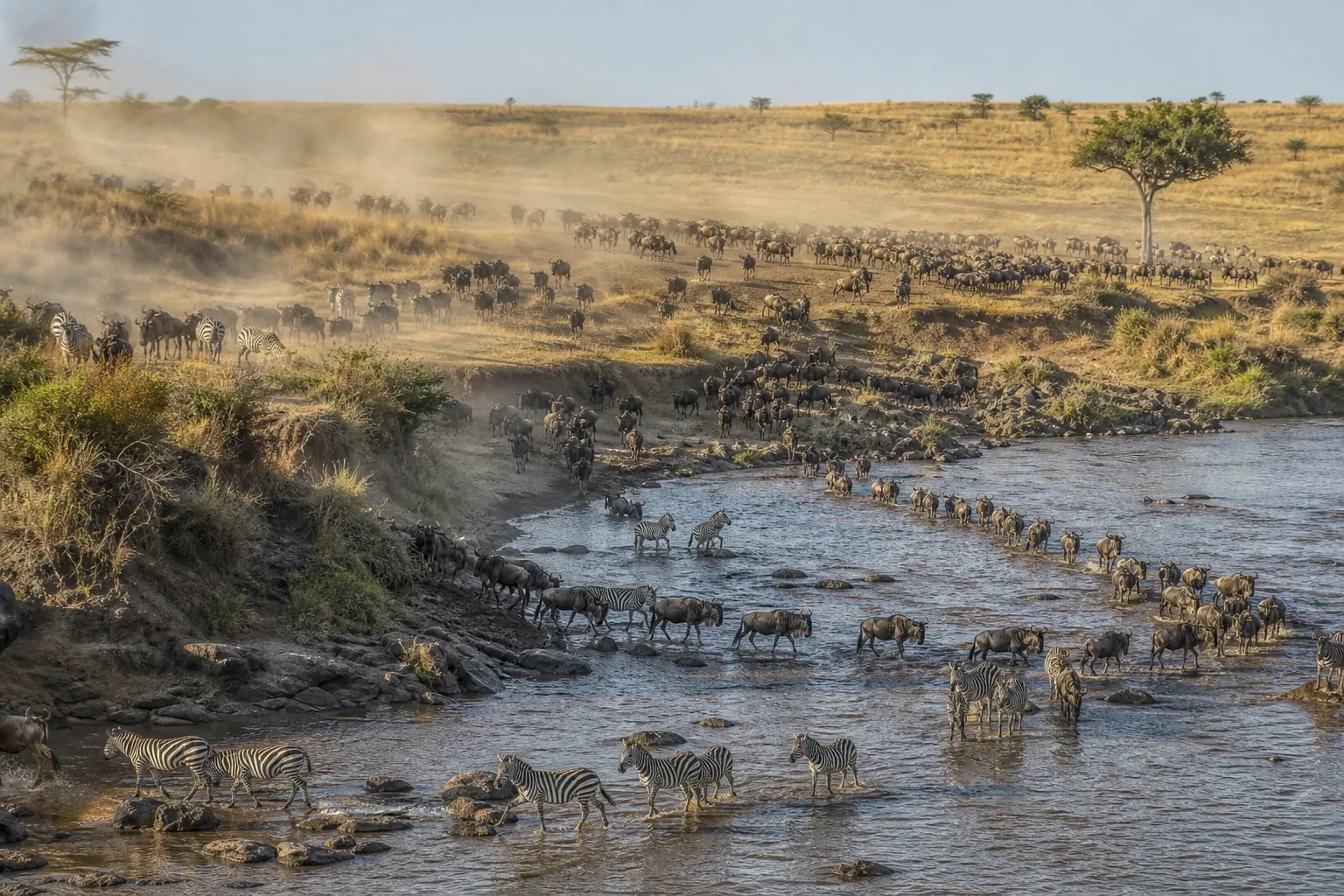
UNESCO describes Serengeti National Park as 1.5 million hectares of savanna at the heart of the wider ecosystem. Its World Heritage profile records an annual circular trek of more than one million wildebeest with hundreds of thousands of other ungulates across Kenya and Tanzania. This movement has broad seasonal phases, but rainfall can shift the herd’s position from one year to the next.
Great Migration Route by Seasonal Phase
| Broad period | Likely ecosystem area | Main movement | Traveller decision |
|---|---|---|---|
| January–March | Southern Serengeti and Ndutu area | Herds use short-grass plains during the calving period | Choose southern access and confirm the camp’s seasonal operating dates |
| April–May | Central and western Serengeti | Herds begin moving north and west as grazing conditions change | Expect rain and check road or airstrip operations |
| June–July | Western corridor and northern movement routes | Groups continue towards northern Serengeti | Select location over marketing labels; the herds can spread across a large area |
| July–October | Northern Serengeti and Maasai Mara | Some herds cross rivers and use northern grazing | Allow several drive periods and do not buy a guaranteed-crossing claim |
| October–December | Movement back through northern and central Serengeti | Rain and fresh grazing draw herds south again | Check current field reports before choosing a northern or central camp |
Route basis: UNESCO Serengeti National Park and the Kenya Wildlife Service wildlife corridor report. Dates are planning windows rather than promises.
Why the Migration Moves
The migration connects rainfall to grazing and grazing to herd movement. The Kenya Wildlife Service identifies the Maasai Mara National Reserve and surrounding conservancies as the Kenyan part of the connected Serengeti–Mara ecosystem. UNESCO describes Serengeti National Park as its central protected area. Neither source treats the migration as a one-way event or a fixed-date attraction.
- Seasonal rain grows fresh pasture across different parts of the ecosystem.
- Fresh pasture draws grazing herds along the circular route.
- Rivers interrupt parts of that route and create uncertain crossing points.
- Predators follow the moving prey base.
- Camp location determines which part of the route a traveller can reach during a game drive.
What Makes Mara River Crossings Uncertain?
A crossing begins when animals gather, test the bank and eventually enter the water. Herds can wait, retreat, split or cross outside a traveller’s game-drive period. Rain upstream can also change river conditions. A guide can monitor tracks and herd direction, but no person controls the moment.
Choose a northern Serengeti or Mara camp for its access zone, guiding plan and number of available drive periods. Do not choose it solely because a brochure prints a crossing photograph.
How to Choose a Migration Camp
- Name the ecosystem sector. Ask whether the camp serves southern, central, western or northern Serengeti, the Maasai Mara reserve, the Mara Triangle or a conservancy.
- Check the operating calendar. Mobile and seasonal camps may move or close.
- Measure the drive radius. Ask how long a normal drive takes to reach the expected herd area.
- Check cross-border assumptions. A Kenya game drive does not simply cross into Tanzania, or vice versa.
- Read the cancellation terms. Weather and herd position do not normally create an automatic refund.
Related Kenya and Tanzania Planning
The comprehensive Africa trip-planning guide places the migration inside a wider holiday. The Kenya safari month guide explains rainfall context, while Amboseli National Park provides a separate elephant and wetland safari entity for a multi-park route.
Frequently Asked Questions
Can you predict exactly when a Mara River crossing will happen?
No. Guides can track herd position and recent movement, but rainfall, grazing, river conditions and animal behaviour control the timing.
What is the best month for the Great Migration in Kenya?
July to October is the broad planning window commonly associated with herds in the Maasai Mara, but their arrival and return vary. Ask for current herd reports before selecting a last-minute camp.
Is the migration only about river crossings?
No. The full cycle includes calving, long overland movement, grazing, predator–prey interactions and the return south. River crossings are one uncertain phase.
Compare Migration Accommodation
Compare the same dates and map area through Expedia Kenya migration accommodation, Booking.com Maasai Mara properties and Kayak Maasai Mara hotels. Confirm the camp’s actual location before paying.