Kenya vs South Africa Safari: Cost, Wildlife, and Experience
Kenya suits travellers who prioritise classic savanna landscapes, the Great Migration, and large open-plain herds. South Africa suits travellers who want Big Five reliability, self-drive accessibility, and granular control over daily costs. Choosing between these two African safari giants depends on your wildlife priorities, travel style, and how far your budget stretches — and I've broken every factor down across wildlife, cost, landscape, experience, and timing below.
South Africa makes independent safaris practical for budget-conscious travellers by removing the mandatory guide-and-vehicle cost that defines Kenya's park entry model. Kenya delivers competitive shared and group safari packages, though non-resident park fees and guided transport requirements push the total cost higher than most first estimates suggest.
| Safari Factor | Kenya | South Africa |
|---|---|---|
| Signature wildlife experience | Great Migration and open savanna herds | Big Five and diverse habitats |
| Famous safari area | Maasai Mara | Kruger National Park |
| Self-drive safari | Not recommended | Widely accessible |
| Budget advantage | Shared/group safari packages | Self-drive and SANParks accommodation |
| Key species | Lion, elephant, cheetah, wildebeest, zebra, giraffe | Lion, elephant, leopard, rhino, buffalo |
| Migration experience | Major annual attraction (July–October peak) | No equivalent event |
| Beach combination | Indian Ocean coast (Diani Beach, Watamu) | Indian and Atlantic coastlines, Garden Route |
| Best fit | Classic East African guided safari | Flexible independent safari |
| Typical guided safari cost | From ~£1,200 per person/5 nights | From ~£800 per person/5 nights (self-drive) |
| Self-drive viability | Not recommended | Highly recommended |
Is Kenya or South Africa Better for Wildlife?
Kenya produces larger-herd spectacles and the world's most famous wildlife migration, while South Africa delivers more accessible, predictable Big Five encounters. Both countries rank among Africa's finest safari destinations — they reward you differently depending on what you're after.
Kenya's headline wildlife regions — Maasai Mara, Amboseli, Samburu, Tsavo, and Lake Nakuru — combine open grasslands, semi-arid terrain, wetland habitats, and acacia woodland. The sheer density of wildlife across these parks is extraordinary. I've watched a single horizon in the Maasai Mara hold lions, elephants, cheetahs, and thousands of wildebeest simultaneously — something genuinely hard to replicate elsewhere. The scale and behaviour of the animals matters more than raw species counts, and that's where the two destinations diverge most sharply.
South Africa's wildlife network covers Kruger National Park, Addo Elephant National Park, Hluhluwe-iMfolozi, Kgalagadi Transfrontier Park, and private reserves including Sabi Sands and Timbavati. The country's varied habitats — from semi-desert to coastal forest — support not only the Big Five but also some of Africa's richest birdlife, with over 900 recorded species. Kruger alone records approximately 147 mammal species across its roughly 19,485 km².
Fact: The Maasai Mara ecosystem supports one of the highest lion densities on the planet, with estimates suggesting roughly 850–900 lions across the Greater Mara ecosystem — a figure that makes it one of the most productive lion-viewing destinations in Africa.
The experience diverges most clearly at the ecosystem level. Kenya's wildlife operates across genuinely wild, fenceless open systems. South Africa's private reserves — Sabi Sands included — use unfenced internal boundaries with Kruger but maintain external perimeters. That managed structure delivers more predictable sightings and often closer vehicle approaches, which many first-time visitors prefer. Detailed Kenya vs South Africa safari comparison covering wildlife, safety, and costs draws on ground-level operator knowledge from both countries and maps every major travel decision systematically.
What Animals Can You See in Kenya vs South Africa?
Both Kenya and South Africa support the Big Five — lion, leopard, elephant, African buffalo, and rhinoceros — but sighting probability varies sharply by reserve, season, and habitat type.
| Species | Kenya — Sighting Quality | South Africa — Sighting Quality |
|---|---|---|
| Lion | Excellent — Maasai Mara holds very high densities | Very good — Kruger and Sabi Sands reliable |
| Leopard | Good — nocturnal; best in Maasai Mara/Laikipia | Excellent — Sabi Sands produces frequent sightings |
| Elephant | Outstanding — Amboseli holds large free-roaming herds | Excellent — Addo holds 600+ elephants; Kruger 20,000+ |
| Rhinoceros | Critically low — seen mainly at Ol Pejeta Conservancy | Better — both white and black rhino populations established |
| Buffalo | Abundant — large herds in Maasai Mara year-round | Common — Kruger holds approximately 37,000 buffalo |
| Cheetah | Strong — Maasai Mara is one of Africa's best locations | Present but lower density |
| Wild Dog | Rare — occasional sightings in Laikipia | More reliable — Kruger and Hluhluwe-iMfolozi |
| Great Migration | Signature event — 1.5 million wildebeest annual crossing | No equivalent event |
| Whale Shark | Indian Ocean coast (seasonal) | Western Cape coast (Great White Shark diving) |
Rhino Viewing: Kenya vs South Africa
South Africa holds a stronger rhino population than Kenya, positioning it as the better destination for travellers specifically targeting all five Big Five members in a single trip.
Kenya's rhino numbers were devastated by poaching through the 1970s–1990s. Ol Pejeta Conservancy now functions as Kenya's primary rhino sanctuary, holding both black and white rhinos under intensive protection. Lewa Conservancy also runs an active rhino programme. Sightings remain possible but are not guaranteed across general park areas. Ol Pejeta carries additional significance: it shelters the world's last two northern white rhinos — Najin and Fatu — following the death of Sudan in 2018, making it one of the most emotionally resonant wildlife sites on Earth.
South Africa's Kruger National Park holds an estimated 3,500–4,000 white rhinos and a smaller black rhino population — one of the world's single-largest rhino reserves. Private reserves adjacent to Kruger, particularly Sabi Sands and Timbavati, also produce reliable white rhino sightings. Poaching pressure means exact rhino locations are actively protected in both countries; specific coordinates are withheld from public itineraries as standard practice.
Leopard Viewing: Why Sabi Sands Leads
Sabi Sands Private Game Reserve produces more consistent leopard sightings than almost any other location on Earth. The reserve's leopard population has been habituated to vehicles over decades, allowing close, prolonged daytime viewing — some individuals approached to under 10 metres — that Kenya's parks rarely match.
In Kenya, leopard sightings occur regularly in the Maasai Mara and Laikipia Plateau, and Samburu National Reserve's riverine woodland produces strong encounters because leopards use tree canopies above watercourses. The mechanism driving the gap is habituation: Sabi Sands guides have worked specific territories for decades, building leopard identification records and territory maps that new guides inherit. We've found that travellers who rank leopard as their priority animal almost always achieve better results in South Africa's private reserves.
Cheetah Viewing: Kenya's Open Plains Advantage
Kenya's Maasai Mara delivers the strongest cheetah-viewing conditions because open grassland favours cheetah hunting behaviour and makes them visible at distance. South Africa hosts cheetah populations across Kruger and the Waterberg region in Limpopo, but distribution is less concentrated than in the Mara ecosystem. The Cheetah Conservation Fund reports the global wild cheetah population at approximately 7,000 individuals, with East Africa hosting a significant proportion.
Travellers who rank cheetah above all other species will find the Maasai Mara a more consistent destination. Travellers chasing the complete Big Five — specifically rhino — will find South Africa's private reserves more practical, because Kenya's rhino populations remain smaller and concentrated in specific conservancies.
Wildlife Calendar: When to Visit Kenya vs South Africa
Timing your safari determines which wildlife events you access, which seasonal conditions you encounter, and how much you pay per night.
Kenya's Wildlife Seasons
| Month | Season | Wildlife Visibility | Migration Activity | Crowd Level |
|---|---|---|---|---|
| Jan–Mar | Dry | High | Low (calving in Serengeti) | Moderate |
| Apr–May | Long Rains | Reduced | Low | Low |
| Jun–Oct | Dry | Very High | Peak (Mara River crossings) | High |
| Nov | Short Rains | Moderate | Dispersing | Low–Moderate |
| Dec | Dry Start | Good | Minimal | Moderate |
- July–October — Great Migration river crossings at the Maasai Mara; peak season; book 12+ months ahead
- January–March — Calving season in the Serengeti/southern Mara; predator activity increases sharply
- June–October — Dry season concentrates animals at water sources; prime visibility across all major reserves
- April–May — Long rains reduce road access; rates drop 20–40%; birdlife peaks
Parks like Amboseli, Samburu, and Tsavo West each follow slightly different micro-climates — rainfall doesn't hit every destination identically. Samburu sits in a semi-arid zone; visitor numbers remain manageable even during peak months, making it one of my preferred alternatives to the Mara during July–August when vehicle congestion spikes.
South Africa's Wildlife Seasons
| Region | Best Months | Worst Months | Key Wildlife Draw |
|---|---|---|---|
| Kruger National Park | May–Sep | Jan–Mar | Big Five, leopard, wild dog |
| Sabi Sands Private Reserve | May–Sep | Jan–Mar | Leopard, lion, elephant |
| Cape Town | Nov–Feb | Jun–Aug | Great White Shark, whale watching |
| Garden Route | Year-round | None significant | Marine wildlife, birdlife |
| Addo Elephant Park | Year-round | None significant | Elephant, black rhino |
- May–September — Dry winter season; vegetation thins; Big Five easier to locate in Kruger's denser bushveld; cooler temperatures
- October–April — Summer rains bring lush vegetation, newborn animals, and exceptional birdwatching
- June–August — Whale watching season off the Western Cape
- Year-round — Kruger stays open 365 days; private reserves operate continuously
South Africa spans multiple climate zones, and this produces a planning trap worth naming directly. Booking November for Cape Town means visiting Kruger in thick vegetation. Booking July for Kruger means Cape Town will be cold and wet. No single month optimises both — travellers must anchor around whichever experience they prioritise. I've self-driven Kruger in both March and July; the July dry-season difference in sighting quality is stark.
South African school holidays — late June, late September, and December — push Kruger's gate count sharply upward, sometimes exceeding 3,000 day-visitors in high-traffic zones. Budget travellers should compare accommodation rates by season against realistic wildlife expectations before locking travel dates.
How Much Does a Kenya Safari Cost vs South Africa?
South Africa produces lower entry-level safari costs than Kenya, primarily because self-drive access through Kruger eliminates guide and vehicle fees that are effectively mandatory in Kenyan national parks.
Kenya Safari Costs (Per Person, 2025–2026)
- Budget shared group safari: From £1,200–£2,500 per person for 7–8 nights (shared vehicle, mid-range lodges)
- Mid-range guided safari: £2,500–£5,500 per person for 8–10 nights
- Luxury private conservancy: £6,000–£15,000+ per person (Ol Pejeta, Laikipia private camps, Angama Mara)
- Maasai Mara park fee: Approximately $200 (£158) per person/day during peak season (non-residents)
- Self-drive status: Not recommended — guided transport is standard practice
- Internal flights between parks: £150–£350 per leg; road transfers between some northern reserves exceed 6 hours
Kenya's most common budget error is over-cutting the number of reserve nights to save money — only to spend those savings on extra road hours. A geographically tight, 2–3 reserve route consistently delivers more wildlife per pound spent than an ambitious 5-park circuit on a squeezed budget.
South Africa Safari Costs (Per Person, 2025–2026)
- Budget self-drive safari: From £800–£1,500 per person for 7 nights (SANParks accommodation, own vehicle)
- Mid-range guided tour: £1,800–£3,500 per person for 7–10 nights
- Private reserve luxury (Sabi Sands/Timbavati): £4,500–£12,000+ per person
- Kruger National Park entrance: Approximately £20–£30 per person/day (SANParks rate)
- Self-drive status: Highly practical and widely recommended
Fact: South African National Parks (SANParks) manages 21 national parks covering approximately 4 million hectares. SANParks rest camps inside Kruger offer accommodation from as little as £30 per person per night for a basic bungalow — making South Africa one of Africa's most accessible self-drive safari destinations.
The cost gap widens when you account for Kenya's non-resident park fees. Maasai Mara daily fees for non-residents run approximately $200 per person during peak migration season — adding £630–£790 to a 4-day Mara visit before accommodation. South Africa's SANParks fees sit at a fraction of that. A budget-conscious couple can complete a 6-night Kruger self-drive for roughly £1,600–£2,200 all-in — a figure that barely covers two nights at a mid-range Maasai Mara camp.
Full Cost Comparison Table: Kenya vs South Africa
| Cost Category | Kenya (per person, 7–8 days) | South Africa (per person, 7–10 days) |
|---|---|---|
| Budget guided/shared group safari | £1,200–£2,500 | £800–£1,500 (self-drive Kruger) |
| Mid-range guided lodge safari | £2,500–£4,500 | £2,000–£3,500 |
| Luxury private reserve | £7,000–£15,000+ | £7,000–£12,000+ |
| Self-drive option available? | No — not recommended | Yes — well-established |
| Park entry per day | ~£158 pp (Mara, peak) | ~£20–£30 pp (SANParks) |
| Internal transport | £150–£350 per flight leg | £40–£80/day car hire |
What Costs to Compare Before Booking
Compare park fees, transport, accommodation, meals, game drives, transfers, and taxes — not just the headline accommodation rate. A £150-per-night camp becomes far more expensive once conservation levies, vehicle hire, and transfers are added back in. When building cost comparisons, run every item through this checklist before touching the final figure:
- Confirm whether park or conservation fees appear in the quoted price — they frequently don't
- Check whether the vehicle rate applies per person or per vehicle (a critical distinction in small groups)
- Identify which meals the accommodation rate covers — full board vs. self-catering swings a budget by £40–£80 per day
- Compare airport and inter-lodge transfer costs, which in Kenya can rival a night's accommodation
- Verify whether scheduled game drives carry an extra fee or sit within the base rate
- Calculate fuel costs and rental charges for a South African self-drive itinerary — petrol prices fluctuate monthly
- Check one-way rental surcharges where you plan to drop a car at a different location
- Review seasonal price supplements before locking in travel dates
- Confirm visa and vaccination requirements for your specific nationality and route
- Include comprehensive travel insurance in your total trip budget from day one
Park fees change — sometimes annually. Always verify current rates directly with the relevant park authority or private reserve before finalising any booking.
Self-Drive Safari: South Africa vs Kenya
South Africa supports self-drive safaris across Kruger and most national parks; Kenya does not recommend independent self-drive due to road conditions, navigation challenges, and guide dependency.
Kruger National Park maintains a network of tar and gravel roads accessible in a standard 2WD vehicle, with over 900 km of paved internal roads. SANParks provides well-stocked rest camps with fuel, food, and amenities throughout the park; the online booking system handles reservations directly with clear, public pricing. We've completed the Kruger self-drive circuit in a standard rental car — it works, and it genuinely cuts costs without sacrificing wildlife quality.
A self-drive does not guarantee more wildlife sightings. It delivers greater independence at a provably lower daily cost — especially for groups travelling as two or four adults sharing a vehicle. In my experience, independent travellers who self-drive Kruger and combine it with two nights in a private reserve like Sabi Sands achieve a genuinely hybrid experience: budget days in the national park, then high-quality guided encounters without paying for professional guiding across the full trip.
Self-driving carries real trade-offs worth naming honestly. A professional guide reads animal behaviour, interprets tracks, communicates across guide networks, and routinely spots wildlife that an inexperienced driver passes without registering. South Africa's structure lets budget travellers decide where professional guiding adds value rather than paying for it as a blanket daily rate.
Kenya's national parks and conservancies require guided vehicles for most areas. Park rangers or registered guides must accompany visitors in many reserves. Road conditions — especially during the wet season — make self-navigation risky. For Kenya, a reputable guided operator produces better results and safer logistics. Kruger records over 1.8 million visitor entries annually on self-drive itineraries; no Kenyan park currently matches that infrastructure level.
The Self-Drive Safari Experience in Practice
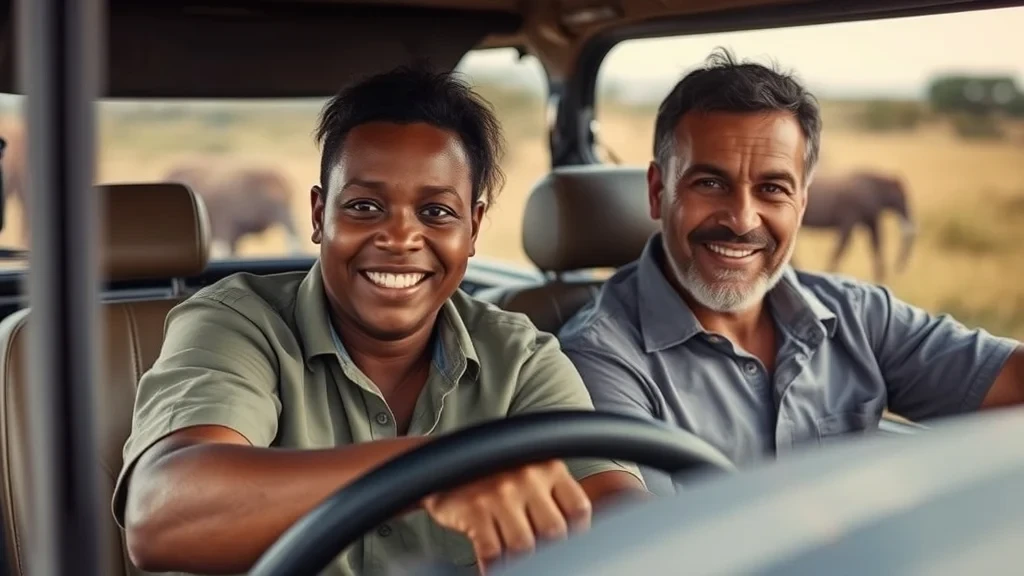
A South Africa self-drive safari operates as an independent road trip through active wildlife habitat. You follow designated routes, observe park regulations, and return to camp before the applicable gate-closing time — typically sunset.
The format gives you direct control over five key decisions:
- Choose your departure time from camp within permitted morning hours
- Select your daily driving route based on recent sighting reports at camp noticeboards
- Spend extended time at high-value sightings — a leopard in a tree, a lion kill — without waiting for group consensus
- Prepare meals at self-catering chalets, cutting daily food costs substantially
- Add guided night drives or morning walks when you want professional interpretation
SANParks operates a 24-hour emergency line for breakdowns and wildlife incidents. Regulations require remaining inside vehicles at all times in unfenced areas, observing speed limits of 50 km/h on tar roads and 40 km/h on dirt, and returning to camp before gate closing times.
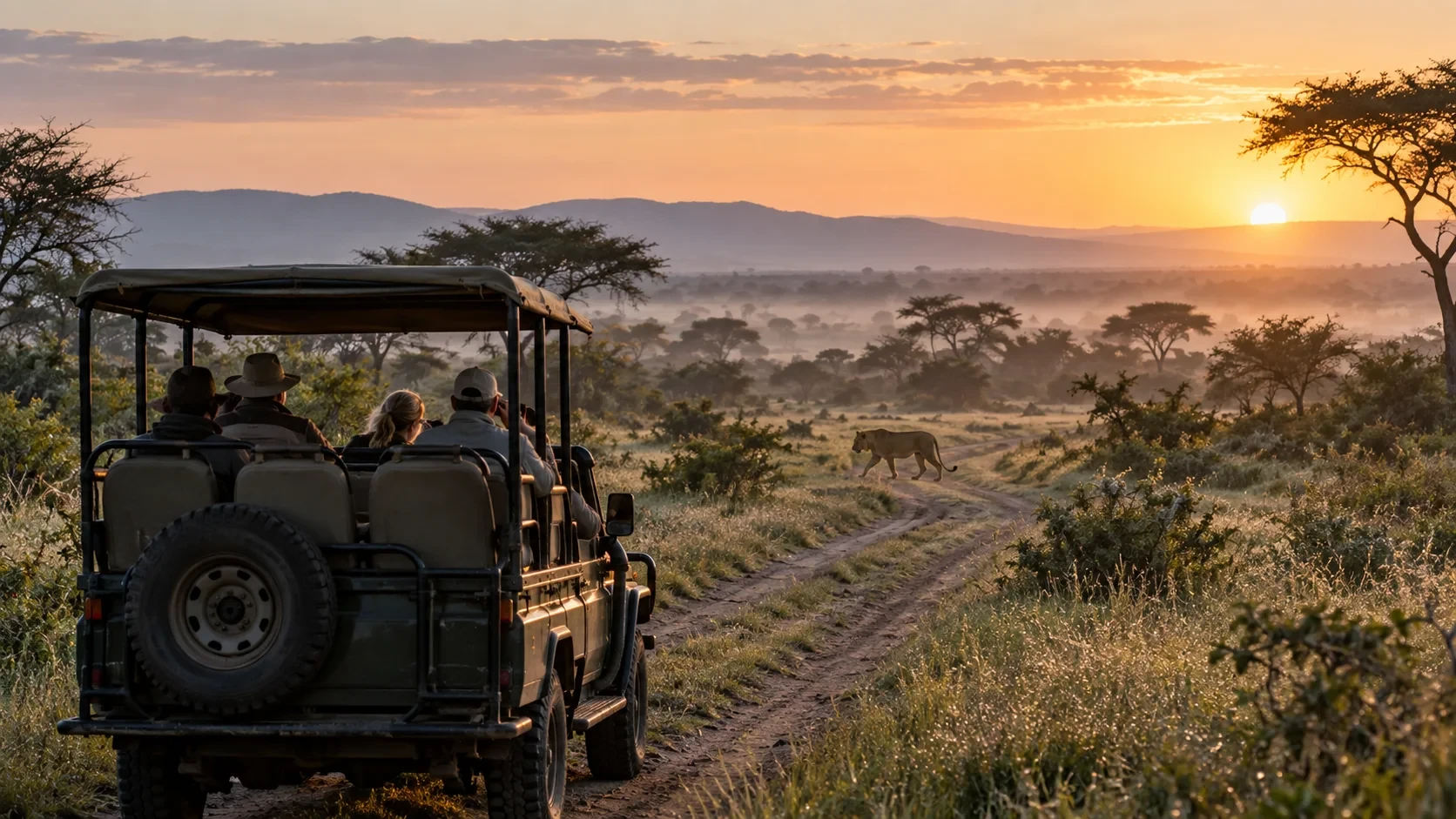
A Kenya guided safari centres on professionally guided game drives through large East African ecosystems. The guide manages driving, navigation, animal identification, and daily logistics — leaving travellers free to observe, photograph, and ask questions. Kenya's visual character is genuinely distinctive: open plains with acacia-dotted horizons, herds of wildebeest numbering in the hundreds of thousands during the migration, and frequent predator-prey interactions across unobstructed terrain. That iconography is real — I'd argue it still delivers something emotionally different from the denser bushveld of Kruger, where sightings feel more intimate and less panoramic.
Private conservancies like Lewa and Ol Pejeta permit off-road driving, night drives, and walking safaris that national parks typically restrict — activities that sharply increase wildlife encounter quality. Cultural tourism adds a second layer to many Kenya itineraries, with Maasai community visits appearing on most operator programmes.
Great Migration: Kenya Produces the Most Dramatic Wildlife Event on Earth
Kenya is the definitive destination if the Great Migration is your primary safari goal. The Maasai Mara National Reserve forms the Kenyan portion of the greater Serengeti–Mara ecosystem and receives the vast wildebeest and zebra herds that move north from Tanzania's Serengeti each year.
Approximately 1.5 million wildebeest complete this annual circuit — the largest overland mammal migration on the planet. Herd movements respond directly to rainfall patterns and grazing availability, so precise timing shifts from year to year. The Mara River crossings — where herds plunge into crocodile-filled water — attract the highest concentration of safari visitors and photographers globally. No operator can guarantee a crossing on a specific game drive. I've spoken with guides who waited three days at the same crossing point and saw nothing, then witnessed four crossings in one afternoon. That unpredictability is part of what makes it extraordinary.
Fact: The Serengeti–Mara ecosystem supports around 1.5 million wildebeest, 400,000 Thomson's gazelles, and 200,000 zebra on their annual circuit — making it the largest terrestrial wildlife migration recorded on Earth.
South Africa holds no equivalent event. Resident wildlife across Kruger and the private reserves provides year-round reliability, but the sheer spectacle of the migration belongs entirely to Kenya's Maasai Mara. Peak migration demand drives accommodation prices sharply upward around the Mara — budget travellers must factor this into planning and book months in advance.
Big Five Safari: South Africa's Logistical Edge
South Africa produces a Big Five-focused safari with greater logistical ease, particularly around Kruger and its adjoining private reserves. Kenya supports all five Big Five species, but many Kenyan itineraries are structured around broader ecosystem experiences rather than targeted species searches.
Kruger's road network — spanning over 19,000 km² — allows visitors to self-drive and actively search for wildlife independently. Sabi Sands deploys professional trackers and open safari vehicles that routinely produce high-quality leopard sightings; it has become internationally recognised for its habituated leopard population. The reserve shares an unfenced boundary with Kruger, which means wildlife moves freely across the ecosystem — a structural arrangement that drives Sabi Sands' exceptional leopard encounter frequency.
Kenya's Maasai Mara delivers particularly strong lion viewing — resident prides are well-documented and guides know their territories precisely. Amboseli National Park pairs exceptional elephant viewing with the backdrop of Mount Kilimanjaro, creating one of Africa's most visually distinctive safari settings. The Amboseli Elephant Research Project has tracked the ecosystem's herds continuously since 1972, producing one of the world's longest-running elephant datasets.
South Africa holds the larger white rhino population globally, making it the stronger choice for travellers whose Big Five priority sits specifically with rhino viewing. Kruger's estimated 3,500–4,000 white rhinos represent one of the world's largest concentrations within a single protected area.
Kenya Safari Landscape: What Each Park Actually Delivers
Kenya's safari circuit covers five distinct ecosystems, each serving a different wildlife-viewing purpose.
- Maasai Mara — open grasslands covering roughly 1,510 km² of protected reserve land; Africa's most iconic predator habitat and the migration's northern anchor
- Amboseli — wetlands and plains supporting elephant herds of up to 1,600 individuals tracked against a Mount Kilimanjaro backdrop; a photographic setting that Kruger's vegetation cannot replicate
- Samburu — dry northern landscapes hosting exclusive species including Grevy's zebra, gerenuk, and reticulated giraffe absent from southern parks
- Tsavo — over 21,000 km² split across East and West, making it one of Africa's largest conservation areas with a semi-arid character distinct from the Mara
- Indian Ocean coast — a Diani Beach or Watamu extension adds a beach-and-bush combination that no South African safari circuit easily replicates in compact format
I've spoken with repeat Kenya visitors who consistently rank Amboseli's elephant encounters — with Kilimanjaro clear on a crisp morning — among the single most visually powerful wildlife experiences on the continent.
South Africa Safari Landscape: Diverse Ecosystems in One Country
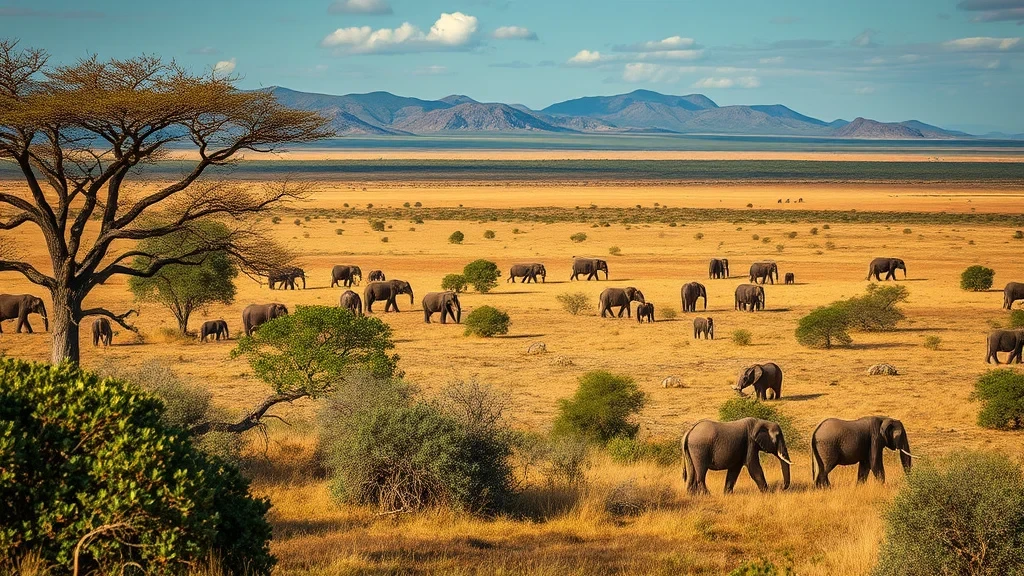
South Africa delivers greater landscape diversity across a single holiday, while Kenya produces some of Africa's most immediately recognisable savanna scenery.
- Kruger bushveld — approximately 19,485 km² of lowveld terrain comparable in scale to Wales, with over 500 bird species and 147 mammal species recorded
- Kgalagadi semi-desert — an arid environment producing extraordinary raptor sightings and black-maned Kalahari lions
- Cape Floristic Region — a UNESCO World Heritage Site with 9,000+ plant species, accessible from Cape Town
- Drakensberg Mountains — the uKhahlamba-Drakensberg range, southern Africa's highest escarpment
- Karoo — sparse, dramatic terrain with ancient fossil records
- Garden Route coastline — where Indian and Atlantic oceans meet at Cape Agulhas, connecting whale watching, forest hikes, and coastal drives within a single road trip
- Winelands — Stellenbosch and Franschhoek viticulture within 90 minutes of Cape Town
South Africa's road and air network connects these regions more accessibly than Kenya's equivalent. A self-drive itinerary can move from Kruger's bushveld to Cape Town's Atlantic coast in under three hours by flight.
| Landscape Type | Kenya | South Africa |
|---|---|---|
| Classic safari savanna | Exceptional | Strong |
| Mountain terrain | Mount Kenya (5,199 m) | Drakensberg |
| Coastal beach access | Diani Beach, Watamu | Garden Route |
| Biome diversity | Moderate | High |
| City-to-safari connectivity | Nairobi hub | Cape Town + Johannesburg |
| UNESCO natural sites | Lake Turkana, Mount Kenya | iSimangaliso, Drakensberg, Cape Floral Region |
| Malaria-free Big Five reserves | No | Yes (Eastern Cape, parts of KwaZulu-Natal) |
South Africa's malaria-free reserve regions — including the Eastern Cape, parts of KwaZulu-Natal, and the Waterberg — eliminate the need for prophylactics entirely, which reduces medical preparation costs and complexity for families travelling with children.
Safari Duration: How Many Days You Actually Need
A productive safari requires a minimum of 3–4 nights in any single wildlife area — anything shorter means you spend more time transferring than watching animals. The correct metric is wildlife hours per trip day, not destination count.
Kenya Safari Duration
- 5–7 nights — one or two reserves, one habitat type, guided throughout
- 8–12 nights — two to three reserves plus beach extension (Diani Beach or Watamu)
- 12+ nights — cross-border Serengeti extension into Tanzania included
Multiple nights in one reserve — say, 4 nights in the Maasai Mara — dramatically reduces transfer time and increases morning and evening game drive hours. Road journeys between some parks take 6–8 hours on unpaved routes, so flying between regions is standard practice for multi-park itineraries.
South Africa Safari Duration
- 4–6 nights — focused Kruger self-drive; Big Five achievable
- 8–12 nights — Kruger plus Cape Town or a private reserve
- 14+ nights — full South Africa road trip with multiple ecosystems
Kruger's distinct southern, central, and northern sections produce different animal concentrations. Budget travellers who self-drive can cover productive loops on repeat days, maximising wildlife hours per trip day rather than chasing destination count.
Family Safari: Which Country Handles Families Better?
South Africa delivers simpler, more cost-effective logistics for families — self-drive parks, rest camps with cooking facilities, on-site shops, and swimming pools give parents real daily flexibility without pre-booking every meal. I've spoken to dozens of families who found Kruger's SANParks camps genuinely manageable with young children.
Kenya remains a brilliant family safari destination when a fully guided itinerary fits the allocated budget. Parks like Amboseli — home to some of Africa's largest free-roaming elephant herds — produce wildlife encounters that genuinely impress children of every age.
Before booking either destination, parents need to investigate these attributes:
- Malaria risk — geographic and seasonal variation affects both countries differently; seek qualified medical advice for any specific route
- Age restrictions on game drives — many private reserves in both countries set minimum ages of 6 or 8
- Room configuration — family rooms and interconnecting chalets are more common in South Africa
- Swimming-pool access — available at most South African rest camps; less guaranteed in Kenya camps
- Driving distances — South Africa's road network is more predictable; Kenya's roads vary considerably by region
Can You Combine Safari With a Beach Holiday?
Both Kenya and South Africa support safari-and-coast combinations, but they operate through structurally different itinerary formats.
Kenya keeps the combination compact and country-specific. After a Maasai Mara or Amboseli safari, travellers fly to the Indian Ocean coast — Diani Beach, Watamu, Malindi, or Mombasa. The wildlife-to-beach transition takes roughly an hour by domestic flight, which keeps the itinerary tight. Diani Beach pairs extremely well with a Maasai Mara safari — it offers the strongest reef snorkelling on Kenya's coast alongside genuine beach-resort infrastructure.
South Africa's beach extension operates through a road-trip or multi-stop format:
- Kruger → Panorama Route → Johannesburg → fly Cape Town
- Kruger → fly Cape Town → Garden Route self-drive
- Kruger → Swaziland → Durban → Garden Route
Cape Town adds a world-class coastal city experience — Table Mountain, Boulders Beach penguins, whale watching at Hermanus between June and November, and the Cape Peninsula. South Africa's combination format requires more time — typically 10–16 days minimum to do justice to both Kruger and Cape Town — but delivers far greater destination diversity than Kenya's more focused coastal swing.
Is Kenya or South Africa Crowded?
Crowding varies more by reserve type, season, and accommodation zone than by country. Both destinations produce vehicle concentrations at high-profile sightings — a cheetah hunt in the Mara draws the same kind of vehicle cluster as a leopard sighting near Lower Sabie in Kruger.
The Maasai Mara attracts peak demand between July and October. Popular predator sightings regularly draw 6–12 vehicles simultaneously in the main reserve. Private conservancies bordering the Mara — Olare Motorogi, Naboisho, and Ol Kinyei — enforce strict vehicle limits per sighting, but their daily conservancy fees add £40–£80 per person on top of accommodation costs.
Kruger's large road network disperses traffic effectively except during South African school holidays. Its sheer size — nearly 20,000 km² — means two vehicles on the same road can feel genuinely isolated. Private reserves sharing unfenced borders with Kruger, such as Sabi Sands, limit vehicles per sighting to three or four and produce consistently close encounters. Budget travellers face a real trade-off: exclusivity costs money in both countries.
Safety: What You Actually Need to Know
Both Kenya and South Africa require standard travel safety precautions; neither destination is uniformly dangerous, but specific risk profiles differ by location.
Kenya's main safari areas — Maasai Mara, Amboseli, and Samburu — operate safely for tourists. Urban areas, particularly Nairobi's central business district, require more vigilance around petty crime. Guided safari operations manage security logistics as standard practice.
South Africa carries higher recorded urban crime rates, particularly in Johannesburg and Cape Town city centres. Safari areas — including Kruger and private reserves — maintain secure operations. Self-drive travellers benefit from planning routes through established rest camps and avoiding driving inside the park at night.
Practical steps that reduce risk in both destinations:
- Book licensed, reputable operators with verified guide qualifications
- Stay in accommodation within or directly adjacent to reserves
- Follow guide instructions around wildlife — exits from vehicles are controlled inside most parks
- Use hotel safes and carry minimal valuables in city transit points
We consistently advise clients to concentrate urban time — Nairobi or Cape Town — at the end of the trip rather than the start, so any security incident doesn't derail the main safari portion. Travel insurance covering emergency medical evacuation applies to both destinations without exception.
Kenya vs South Africa: Which Safari Destination Should You Choose?
Choose Kenya for the Great Migration, open savanna spectacle, and classic East African wildlife encounters. Choose South Africa for Big Five reliability, self-drive flexibility, and lower entry-level costs. The wildlife priority produces the clearest decision — and that's the frame I use with every traveller who asks me this question.
| Your Main Priority | Better Destination |
|---|---|
| Great Wildebeest Migration | Kenya |
| Classic open savanna experience | Kenya |
| Cheetah-focused game viewing | Kenya |
| Amboseli elephant herds | Kenya |
| Guided East African safari | Kenya |
| Cross-border Serengeti extension | Kenya |
| Big Five-focused itinerary | South Africa |
| Leopard in private reserves | South Africa |
| Self-drive independence | South Africa |
| Budget-controlled family trip | South Africa |
| Malaria-free Big Five safari | South Africa |
| Flexible road-trip format | South Africa |
| First safari, simpler logistics | South Africa |
We often recommend South Africa to first-time solo budget travellers and Kenya to families or groups seeking a guided, fully-managed wildlife experience. Both countries reward repeat visitors — and many travellers eventually book both. A two-country itinerary covering Kenya and South Africa works well over 14–21 days, connecting Nairobi to Johannesburg or Cape Town in approximately 4–5 hours direct or one-stop.
Neither country guarantees specific sightings — wildlife moves freely across both ecosystems and responds to seasonal rainfall and prey movement rather than visitor itineraries. That unpredictability is part of what makes safari worthwhile.
Frequently Asked Questions
Which African safari country is better value for solo budget travellers in 2025?
South Africa delivers better daily value for solo budget travellers because Kruger National Park's self-drive infrastructure removes guide and vehicle fees entirely. SANParks rest camps inside Kruger cost from approximately £30–£70 per person per night, with park entry around £20–£30 per day. Kenya's guided-only model pushes entry costs above £120–£150 per person per day minimum. According to SANParks official accommodation data, over 1.9 million visitors entered Kruger in a recent annual count, the vast majority on self-drive itineraries — confirming the model's practical accessibility at scale.
What exclusive wildlife species can you only see in Kenya and not South Africa?
Kenya's northern reserves — particularly Samburu National Reserve — host species entirely absent from South African parks: Grevy's zebra, gerenuk, reticulated giraffe, and Beisa oryx. These species are endemic to East Africa's semi-arid zones. Additionally, the Great Migration's wildebeest and zebra river crossings at the Mara River represent a wildlife event biologically impossible to replicate in South Africa's enclosed reserve system. Kenya also provides access to Ol Pejeta's northern white rhinos, the last two individuals of their subspecies on Earth.
Do Kenya and South Africa safaris require malaria prophylactics?
Both destinations carry malaria risk, but South Africa provides malaria-free alternatives unavailable in Kenya. Kenya's malaria risk concentrates in lower-altitude areas — including the Maasai Mara and coastal strip — with risk elevated during wetter months; prophylactics are standard medical advice for most Kenyan safari routes. South Africa's Eastern Cape, parts of KwaZulu-Natal, and Waterberg region host Big Five reserves entirely outside the malaria belt, removing the prophylactic requirement for those specific itineraries. Consult a qualified travel health clinic 6–8 weeks before departure for route-specific advice.
How does vehicle crowding at sightings compare between Maasai Mara and Kruger National Park?
Vehicle density at high-profile sightings differs structurally between the two parks. In the main Maasai Mara National Reserve, popular predator sightings attract 6–12 vehicles simultaneously during peak season. Private conservancies bordering the Mara — including Olare Motorogi and Naboisho — enforce limits of 3–6 vehicles per sighting, charging a daily conservancy fee of approximately £40–£80 per person above accommodation costs. Kruger's nearly 20,000 km² disperses self-drive traffic effectively outside South African school holidays, when day-visitor numbers sometimes exceed 3,000 in high-traffic zones; private reserves like Sabi Sands cap sightings at 3–4 vehicles.
Can a Kenya or South Africa safari be extended into neighbouring countries?
Both destinations support multi-country extensions with minimal logistical complexity. Kenya connects directly to Tanzania's Serengeti National Park by road or charter flight — a cross-border addition that captures the migration's calving phase between January and March in the Ngorongoro region and completes the full Serengeti–Mara circuit. South Africa connects to Mozambique's Bazaruto Archipelago for Indian Ocean diving, Botswana's Okavango Delta for mokoro water safaris, and Zimbabwe's Victoria Falls — all accessible by short flight from Johannesburg. A two-week Kenya-Tanzania combination or a South Africa-Botswana-Zimbabwe circuit each represent well-established regional itineraries with direct flight links throughout.