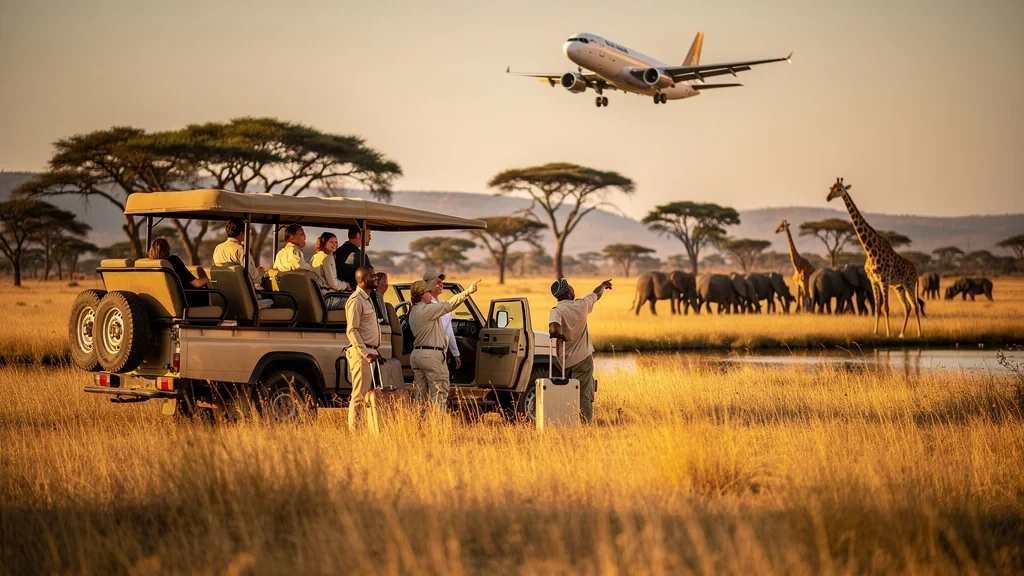
Safari Destination Comes Before Choosing a Lodge
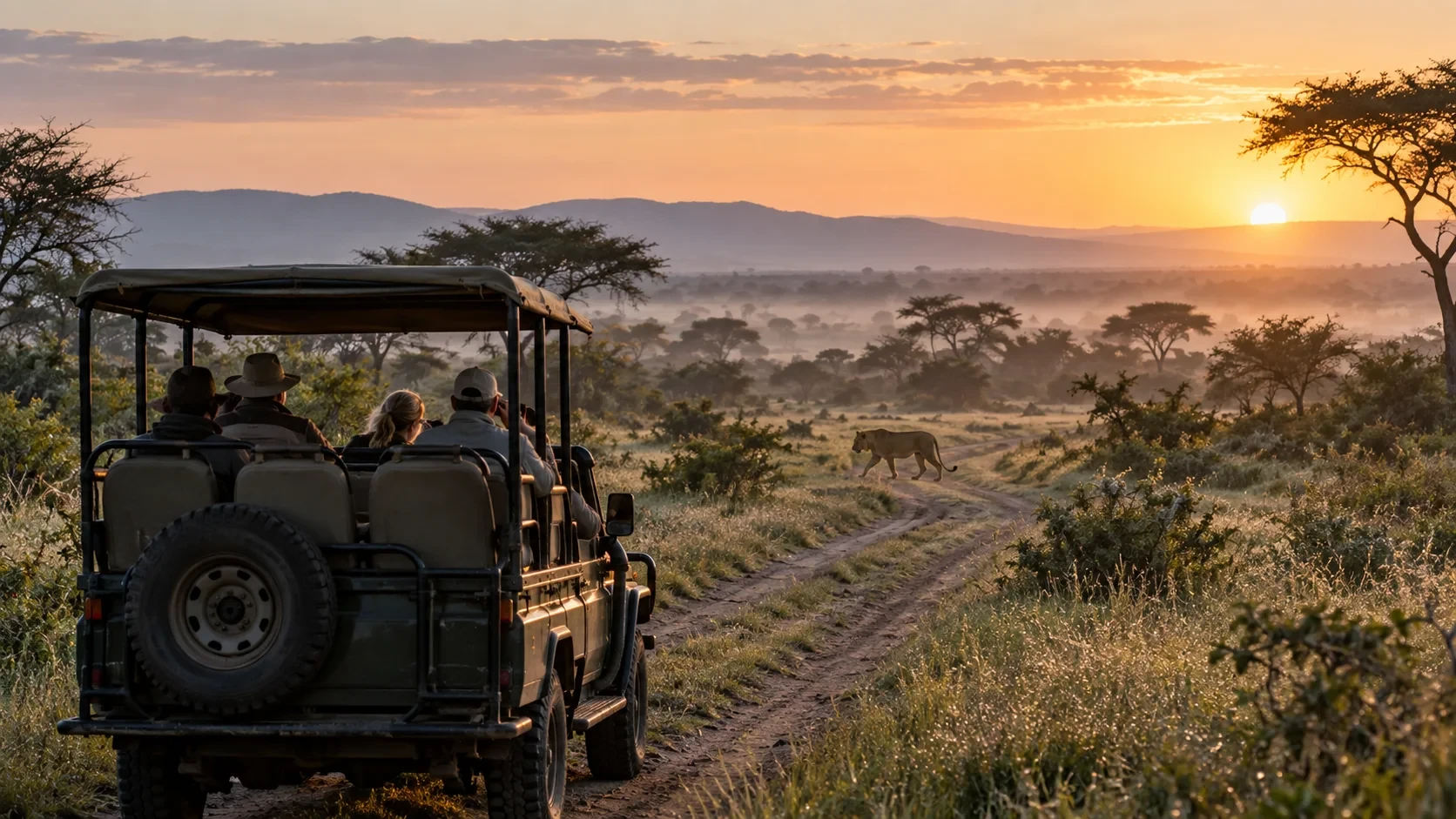
Choosing your safari destination before selecting a lodge determines which wildlife, ecosystems, and seasonal events you can actually experience. A lodge adds comfort and access, but it cannot compensate for a mismatched destination. I've seen travellers book stunning five-star properties and miss the Great Migration entirely — because the lodge came first. The destination sets the wildlife calendar, defines the activity menu, and determines the total cost envelope before a single lodge rate appears on your screen.
Why Your Safari Destination Governs Every Downstream Decision
Your safari destination is the primary entity that governs species present, landscape type, permitted activities, and seasonal conditions. The lodge serves that destination framework; it does not replace it.
Starting with accommodation selection creates a fundamental planning error. A traveller who books an attractive lodge in an ecosystem that doesn't match their wildlife goals or travel dates ends up with beautiful interiors and disappointing game drives. The distinction is direct: destination = reason to travel; lodge = where you sleep.
| Decision Factor | Destination Determines | Lodge Determines |
|---|---|---|
| Wildlife | Species present and population density | Access to specific concession areas |
| Landscape | Savannah, delta, woodland, desert, or forest | Immediate property surroundings |
| Activities | Game drives, walking, boating, or gorilla tracking | Which permitted activities are offered on-site |
| Seasonality | Wildlife movements, rainfall, and vegetation | Seasonal rates and availability windows |
| Accessibility | Flights, transfer routes, and total travel time | Final road or air transfer to property |
| Experience Character | Overall safari identity and ecosystem type | Comfort level and service style |
Wildlife experience priorities narrow the destination shortlist before lodge comparisons begin — and that filtering sequence is what the rest of this planning framework enforces.
How Your Safari Goal Points You to the Right Destination
Your primary safari goal drives destination selection because no single African region delivers every wildlife experience equally well. Different ecosystems support different species, habitats, and activities — matching goal to region is the most critical planning decision in the entire itinerary.
I've worked through this framework with travellers repeatedly, and the goals almost always map cleanly to specific destinations:
- Track the Great Migration → Tanzania's Serengeti National Park or Kenya's Maasai Mara ecosystem, timed to the herd's monthly position
- Experience water-based wildlife habitat → Botswana's Okavango Delta, where seasonal flooding drives exceptional game concentrations
- Observe Gorilla beringei beringei (mountain gorillas) → Uganda's Bwindi Impenetrable National Park or Rwanda's Volcanoes National Park
- Develop walking safari experience → Zambia's South Luangwa National Park, widely regarded as the origin of the walking safari tradition
- Combine multi-activity itineraries → Country-level selection determines whether logistics support both activities without excessive transit
Once the primary goal is defined, the list of qualifying destinations narrows fast — and lodge comparisons begin only after that filter closes.
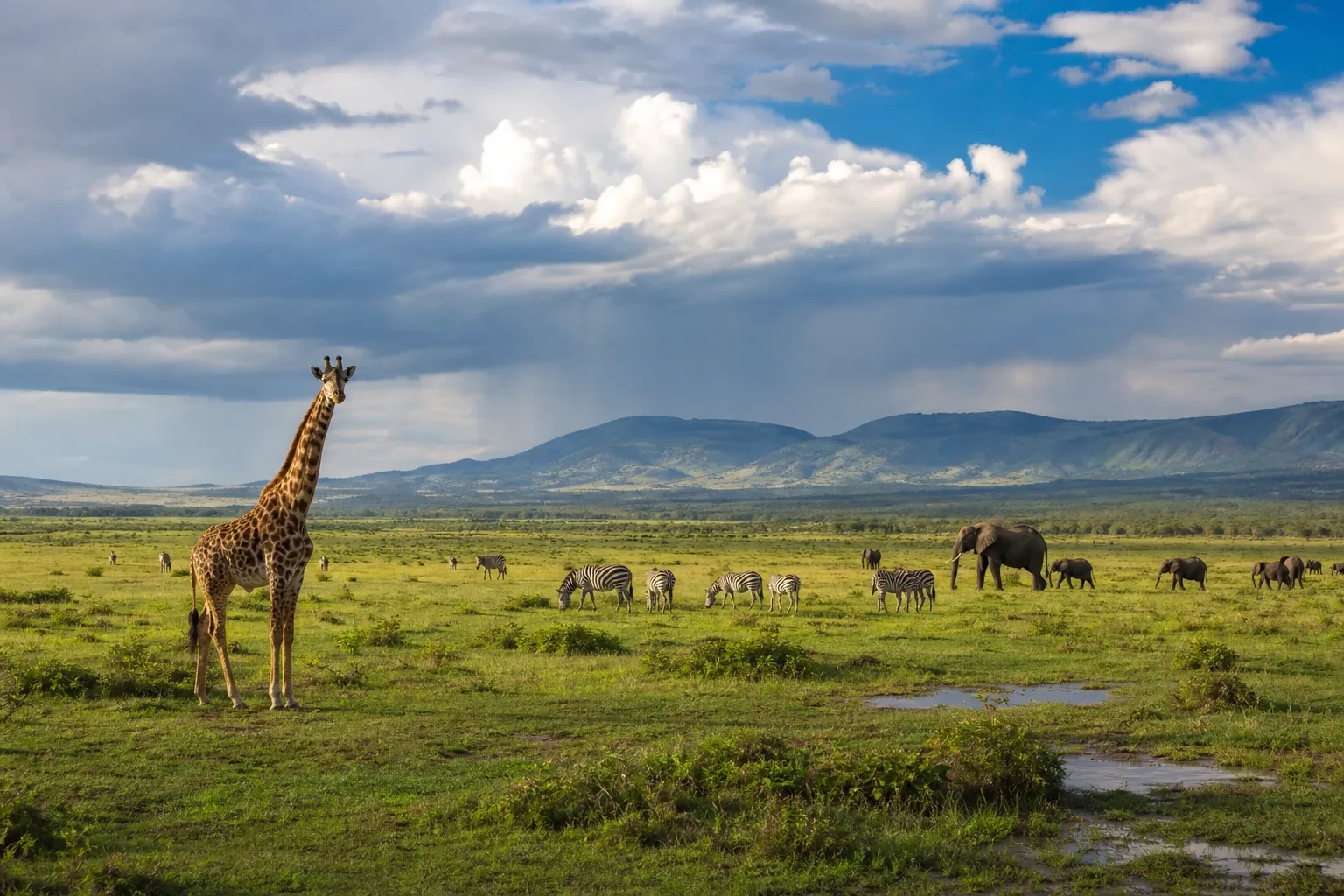
Fact: The Serengeti–Maasai Mara ecosystem hosts the largest terrestrial mammal migration on Earth, with an estimated 1.5 million wildebeest, 250,000 zebra, and 500,000 Thomson's gazelle crossing between Tanzania and Kenya annually. The crossing's exact location shifts month by month — selecting the wrong lodge position by even 80 km can mean missing the river crossings entirely.
Why Safari Season Outweighs Lodge Luxury in Viewing Quality
Safari season directly controls wildlife distribution, vegetation density, water point availability, road conditions, and visitor numbers — variables that affect actual game viewing far more than a lodge's thread count, private plunge pool, or butler service.
Migration-based safaris make this relationship obvious. Migratory herds move across large ecosystems continuously rather than remaining adjacent to a single property. Selecting a highly rated lodge in the wrong seasonal position for your travel dates places you distant from the wildlife event you planned the entire trip around.
Season and geography together naturally filter the lodge shortlist to a manageable selection. In our experience, travellers who lead with destination and season consistently report higher satisfaction than those who book luxury first and adjust expectations later.
Understanding the Serengeti wildebeest migration and its monthly movement patterns is the single most referenced pre-booking research task for East Africa itineraries.
Key seasonal variables that destination selection controls:
- Dry season → Vegetation thins, animals concentrate at water sources, visibility increases
- Wet season → Calving events, fewer tourists, green landscapes, but reduced road access in some regions
- Migration window → Timed to rainfall and grass growth cycles across the Serengeti–Mara ecosystem
- Temperature range → Affects activity scheduling and animal behaviour patterns
Seasonal pricing structures reinforce this point directly. The same tent in the same camp costs materially more during peak season because the experience delivered — predator density, migration presence, dry-bush visibility — is objectively superior to what the same property offers off-season.
| Season Type | Wildlife Visibility | Typical Rate Premium | Best For |
|---|---|---|---|
| Peak (dry season) | High — short grass, concentrated waterholes | +30–60% vs green season | First-time safari travellers |
| Green / wet season | Lower density, lush scenery, newborn wildlife | Base rate | Photographers, birders, repeat visitors |
| Shoulder season | Variable, often excellent value | +10–20% vs green | Experienced travellers with flexibility |
| Migration peak (Serengeti/Mara) | Exceptional — river crossings, predator activity | +40–70% vs off-peak | Bucket-list migration seekers |
Destination choice dictates which season applies. Lodge choice dictates which camp captures it. Getting the destination wrong makes the lodge irrelevant.
How African Ecosystems Differ as Safari Destinations
African safari ecosystems each carry distinct attributes that no amount of lodge quality can replicate — the wildlife species, habitat structure, and activity options are fixed by geography.
| Ecosystem | Country | Signature Wildlife | Peak Season | Signature Activity |
|---|---|---|---|---|
| Serengeti National Park | Tanzania | Wildebeest, lion, cheetah | June–October | Migration game drives |
| Maasai Mara National Reserve | Kenya | Big Five, migration crossings | July–September | River crossing viewing |
| Okavango Delta | Botswana | Elephant, hippo, sitatunga | June–August | Mokoro boat safaris |
| South Luangwa National Park | Zambia | Leopard, wild dog, hippo | May–October | Night drives, walking safaris |
| Bwindi Impenetrable Forest | Uganda | Mountain gorilla (Gorilla beringei beringei) | Year-round | Gorilla trekking |
| Kruger National Park | South Africa | Big Five, wild dog | May–September | Self-drive and guided drives |
| Etosha National Park | Namibia | Elephant, black rhino, lion | May–October | Waterhole game viewing |
Each ecosystem defines a fundamentally different safari character. Expert Africa's destination comparison tool for southern and East African safari regions provides practitioner-level guidance on matching traveller goals to specific destinations.
Ecosystem attributes then constrain the activity menu available to any lodge operating within them — which is the mechanism the next section addresses.
How Activities Change Across Safari Destinations
Safari activity options are determined by geography, wildlife density, and concession regulations — not lodge branding. Vehicle-based game drives operate across most East and Southern African destinations, but specialist activities are geographically locked.
- Mokoro excursions require the shallow-channel wetlands of Botswana's Okavango Delta
- Boat safaris demand navigable waterways — Chobe River, Lower Zambezi, Lake Kariba
- Night drives are prohibited inside most Kenyan national parks but widely permitted on Tanzanian private concessions
- Mountain gorilla trekking is restricted to Rwanda's Volcanoes National Park, Uganda's Bwindi Impenetrable Forest, and DRC's Virunga — nowhere else on Earth
- Horseback safaris and fly-camping require specific operator licences and terrain classifications
Establish which destination permits and physically supports your target activities before shortlisting a single lodge. We have seen itineraries collapse at the booking stage because a client fell in love with a property that lacked the regulatory permissions for the activities they wanted.
Geographically locked activities expose precisely why two lodges inside the same named destination can produce fundamentally different safari outcomes — which is the core of the following section.
How Wrong Lodge Location Reduces Game Viewing Quality
Two lodges within the same named safari destination can deliver significantly different wildlife access because concession boundaries, reserve sections, and habitat types vary considerably within a single park or protected area.
This is one of the most consistently misunderstood facts in safari planning. A lodge positioned inside a private conservancy adjacent to a national park typically offers exclusive game drive access and lower vehicle density. A lodge positioned at the park boundary may operate on shared tracks with multiple vehicles, reducing the quality of individual sightings.
Fact: Kenya's Maasai Mara National Reserve covers roughly 1,510 km², yet properties bordering private conservancies like Olare Motorogi or Naboisho offer exclusive game-viewing terrain up to 10× less crowded than the main reserve during peak migration season.
Practical questions to apply before comparing accommodation:
- Does the lodge sit inside a private concession or on shared national park land?
- Which specific wildlife corridor, waterway, or habitat does the property border?
- What is the maximum number of vehicles permitted at a single sighting?
- Does the lodge's seasonal position align with the wildlife event you're targeting?
- What is the realistic transfer time from the nearest airstrip to the property?
Choosing between a private conservancy lodge and a national park lodge in Kenya produces measurably different game drive experiences — specialist outfitters consistently confirm that conservancy-based lodges offer more exclusive access and off-road driving permissions than standard park circuits.
Concession type and property position establish the structural advantage that guides exploit on every drive — and that structural advantage is what the following comparison framework quantifies.
What to Confirm About a Destination Before Shortlisting Lodges
Destination validation requires confirming that the ecosystem, season, and permitted activities match your specific safari goals before a single lodge is evaluated.
A structured destination check covers:
- Target species — Does the destination hold sustainable populations of the wildlife you want to see?
- Seasonal alignment — Do your travel dates fall within the destination's optimal viewing window?
- Activity permit — Does the region legally permit the activity you want (walking safaris, gorilla trekking, night drives)?
- Logistics viability — Do scheduled flight routes and transfer times make the destination practically accessible?
- Conservation status — Is the protected area well-managed with low poaching pressure and stable wildlife populations?
Responsible Travel's guide to choosing an ethical African safari destination addresses how conservation status and land management directly affect wildlife density and long-term viewing quality.
Only after confirming these destination attributes does lodge comparison become a productive exercise.
Why Travel Logistics Must Be Assessed Before Committing to a Lodge
Safari logistics directly control both total trip cost and the number of usable wildlife hours in your itinerary. Remote destinations frequently require international flights, regional connections, scheduled light-aircraft transfers, road journeys of several hours, or river crossings — often in combination.
A lodge priced attractively in isolation can make the complete itinerary prohibitively expensive or operationally fragile once you map the full routing.
Work through this checklist before any lodge commitment:
- Calculate international and regional flight connections — hub airports, layover durations, minimum connection times
- Check internal charter or scheduled-flight availability with confirmed baggage weight limits (typically 15 kg soft-bag only on light aircraft)
- Measure road and air transfer durations as actual lost game-viewing time
- Account for border crossings when building multi-country itineraries across Kenya/Tanzania, Zambia/Botswana, or Rwanda/Uganda
- Compare night-count against transfer burden — a three-night stay requiring two days of travel each direction produces one productive day in the field
A workable routing converts lodge pricing from a simple room-rate comparison into a genuine value judgement. Logistics modelling then feeds directly into the budget architecture the next section builds.
Does the Safari Destination Determine Your Total Budget?
Total safari cost assembles from destination-level expenses, not just the nightly lodge rate. Park entry fees, conservation levies, internal charter flights, private ground transfers, activity surcharges, and seasonal pricing premiums can each add £300–£900 per person to what initially appeared to be a straightforward lodge bill.
Detailed safari cost breakdowns published by Wilderness Safaris confirm that park and conservation fees alone represent 15–25% of total trip cost in high-fee destinations like Botswana and Rwanda.
Park fees and conservation levies add £50–£200 per person per day depending on the destination. Kenya's Maasai Mara National Reserve charges approximately £70 per adult per day. Uganda's gorilla trekking permits cost £700 per person per trek. Private conservancies adjacent to Kenya's Maasai Mara — including Olare Motorogi, Mara North, and Naboisho — carry Kenya Wildlife Service fees of approximately £50–£80 per person per day on top of lodge rates. Ignoring these figures during initial budget planning routinely produces 20–40% budget underestimates.
Comparing lodges before modelling destination-level costs produces a misleading budget. The correct comparison calculates the complete trip cost — identical night-count, equivalent meal and activity inclusions, same transfer method — across two or three destinations simultaneously. That comparison surfaces the true financial effect of each geographic choice rather than anchoring decisions to a headline room rate.
The Correct Planning Order for a Safari Itinerary
A proven safari-planning sequence moves from desired experience outward to geography, then inward to accommodation. Reversing this order — starting with a lodge that appeared in a magazine — consistently produces mismatched itineraries.
The structured sequence:
- Define the primary wildlife experience — predator sightings, gorilla trekking, Great Migration, birding, walking safaris
- Set travel dates and approximate trip length — school holidays, dry season windows, flight availability
- Identify destinations that match those priorities — East Africa, Southern Africa, Central Africa, West Africa
- Evaluate seasonal wildlife patterns and weather — rainfall, road conditions, vegetation density, breeding cycles
- Check transport, entry requirements, and health considerations — visas, yellow fever certificates, malaria prophylaxis, internal flight connections
- Establish the complete safari budget — park fees, conservation levies, internal flights, private transfers, activities, meals, and accommodation combined
- Select the most suitable reserve, park, concession, or private conservancy
- Shortlist lodges within that area — every property on the list already sits inside the right ecosystem at the right time of year
- Compare lodge-level attributes — guiding standards, vehicle policy, group limits, child policies, room configuration, conservation practices — only at this final stage
This sequence keeps accommodation in its proper role: supporting the safari rather than determining it.
Expert safari-planning guidance from &Beyond applies this destination-first methodology across its East and Southern African portfolio, with lodge selection guided by ecosystem and seasonal calendars rather than property aesthetics.
I've watched travellers book Botswana's Okavango Delta in February on the strength of a lodge's photography — and miss the peak wildlife density window by three months. The lodge was extraordinary. The timing was wrong. Destination knowledge, applied first, would have fixed that before any deposit changed hands.
What to Compare When You Finally Select a Safari Lodge
Lodge selection delivers comfort, style, and service within an already-validated field experience — not a substitute for one. Once the destination, concession zone, and seasonal window are confirmed, every property on the shortlist already qualifies on the variables that matter most. Selection criteria shift from where to how well.
Guiding Standards and Vehicle Policy
Guiding quality directly shapes wildlife access. Private vehicle allocation — where your group occupies one game-drive vehicle exclusively — produces longer sightings, flexible timing, and off-road tracking where the reserve permits it. Shared vehicles introduce scheduling compromises. I consistently rate guiding standards and vehicle policy above room configuration when comparing properties at similar price points.
Camp Location Within the Reserve
Camp location within a reserve produces a structural advantage. A lodge positioned on a permanent water source, along a migration route, or adjacent to a high-density predator territory gives rangers a geographic edge that no amenity package replicates. Properties on reserve boundaries or in lower-traffic zones often compensate with price reductions — a reasonable trade-off only if wildlife density reflects the cost difference.
Activity Range and Destination Dependency
| Activity Type | Availability Determinant | Destination Dependency |
|---|---|---|
| Game drives (day) | Reserve access rules | Medium |
| Game drives (night) | Private concession required | High |
| Walking safaris | Permit, guide certification | High |
| Boat safaris / mokoro | River/delta geography | Very High |
| Gorilla or chimp trekking | Permit quota, species range | Absolute |
| Hot air balloon | Operator presence | Medium |
| Cultural village visits | Proximity, community agreements | Medium |
Several activities in this table are destination-locked — no lodge decision produces them outside the geographic area where they naturally occur. That dependency reinforces why destination selection precedes lodge selection in every practical scenario.
Rate Inclusions and Total Cost Comparison
Safari lodge rates carry widely different inclusion structures. A headline nightly rate of £600 per person that excludes park fees, conservation levies, and laundry competes differently against a fully inclusive rate of £750 when you calculate actual daily spend. Understanding how all-inclusive safari pricing structures work clarifies the true cost differential between properties and prevents budget miscalculations at the booking stage.
Room Configuration, Accessibility, and Family Policy
Room configuration matters when your group includes children, multi-generational travellers, or guests with mobility requirements. Minimum age policies at many high-end camps exclude children under 12 from standard game vehicles. Family-specific properties run separate child-friendly drives and provide age-appropriate guides. Accessible safari camps remain rare — confirming specific infrastructure with operators directly before booking prevents a mismatch on arrival.
Conservation Practices and Community Integration
Conservation-linked lodges direct revenue into anti-poaching units, wildlife corridors, and community benefit trusts. This is not abstract goodwill — it affects the long-term health of the wildlife population you travelled to see. The relationship between safari tourism revenue and wildlife conservation outcomes shows that community-benefit models produce measurably lower poaching rates and higher wildlife density over time, making conservation investment a practical selection criterion rather than a marketing claim.
Why Lodge Comfort Gains Meaning Only After Destination Is Confirmed
A private plunge pool, panoramic suite, or butler service becomes a meaningful advantage only when the property already delivers wildlife access and field-activity quality that match your reasons for travelling. The same amenities attached to a lodge in a depleted reserve, outside the optimal wildlife season, or three hours from the airstrip by unpaved road represent an expensive distraction from an underperforming field experience.
The structural logic of the entire planning framework collapses into one clear chain:
- Safari destination → determines → wildlife access, seasonal timing, ecosystem type
- Safari season → constrains → travel dates, road conditions, available activities
- Activity requirements → filters → reserve selection, concession type, guide certification level
- Reserve selection → narrows → lodge shortlist to a manageable set of genuinely comparable options
- Lodge selection → delivers → comfort, style, and service within an already-validated field experience
Safari planning resources that start with destination ecosystems rather than accommodation categories consistently produce itineraries with higher traveller satisfaction scores — because the foundational decision aligns with the experiential goal before any comfort-layer preference enters the conversation.
The lodge is the vessel. The destination is the water it floats on. Choose the water first.
Frequently Asked Questions
Should you book a safari lodge or destination first when planning from scratch?
Book the destination first, every time. The destination controls which species, habitats, and seasonal events you can access — no lodge overrides those fixed geographic variables. In our experience, travellers who reverse this order frequently end up in premium accommodation during the wrong season or in the wrong zone of a large ecosystem. Peak-season properties in high-demand reserves — particularly Botswana's Okavango Delta, Kenya's Mara conservancies, and Rwanda's gorilla-permit camps — sell out 12–18 months in advance, so the practical sequence is: confirm destination and travel dates, then book lodges.
What safari destination offers the best value for first-time travellers to Africa in 2025?
South Africa's Kruger National Park and its adjacent private reserves — including Sabi Sand, Timbavati, and Klaserie — deliver the most accessible first-time safari experience. The Kruger ecosystem holds all Big Five species at high densities, operates excellent road infrastructure, and connects to direct international flights through Johannesburg. Tanzania's northern circuit, combining Serengeti National Park and Ngorongoro Crater, ranks as an equally strong alternative: the Serengeti supports year-round resident wildlife plus the annual migration of 1.5 million wildebeest, while Ngorongoro's caldera concentrates the highest Big Five density of any comparable area.
How much do park fees and conservation levies add to a safari budget across different African countries?
Park fees and conservation levies add £50–£200 per person per day depending on the destination — a figure that sits entirely outside lodge rates. Kenya's Maasai Mara National Reserve charges approximately £70 per adult per day. Uganda's gorilla trekking permits cost £700 per person per trek. Botswana's national park and conservation levies add between £80 and £200 per person per day, which is why all-inclusive lodge pricing in the Okavango Delta appears elevated against East African alternatives. According to Wilderness Safaris' published cost breakdowns, park and conservation fees represent 15–25% of total trip cost in high-fee destinations — ignoring them during initial budgeting routinely produces 20–40% underestimates.
How many nights at a single safari camp justify the transfer time to remote destinations?
A minimum of three nights at a single safari camp justifies the transfer time investment for most remote destinations. Four nights is the standard recommended by most African specialist operators for destinations requiring light-aircraft access, giving two full morning-and-afternoon drive cycles bookending the travel days. Itineraries built on two-night stays across multiple camps prioritise variety over depth and frequently sacrifice peak morning game-drive hours to packing and transfer logistics. A three-night stay requiring two days of travel in each direction effectively produces one productive day in the field — a ratio that most experienced operators advise against.
Is a private conservancy always better than a national park for a safari experience?
Private conservancies adjacent to national parks — such as Mara North or Olare Motorogi in Kenya, or Sabi Sand adjacent to Kruger — allow night drives, off-road vehicle tracking, and walking safaris that national park regulations prohibit. Wildlife density in these zones frequently matches or exceeds the core park, and vehicle numbers per sighting are controlled. The trade-off is cost: conservancy access fees layer on top of lodge rates, increasing daily spend by £50–£150 per person. Expert Africa's analysis of Kenya's national parks versus private conservancies confirms that private reserve guests consistently report higher-quality and more exclusive wildlife encounters — though the premium is real and must be modelled into the destination budget before any lodge comparison begins.